Rakesh had thirty minutes before the client walkthrough, and one open question sat on his desk. Three separate contractors had sent three separate lists of fasteners for the same facade package and none of the lists matched. He needed one answer, not three opinions, and he needed it before the site meeting started. Anyone who has managed a live construction site knows this moment. The drawings are fine. The schedule is fine. It is the fixing that quietly decides whether the job holds up, literally once the scaffolding comes down.
That single decision, which Fischer products to specify and why, comes up on almost every project, whether it involves anchoring a steel bracket into cracked concrete or fixing a light switch box into hollow block. The good news is that Fischer builds its range around exactly this kind of real world uncertainty, with a fastener or fixing designed for nearly every substrate, load type and exposure condition a site engineer will encounter.
Why Fischer Leads on Construction Fixing Systems
Fischer earned its reputation the unglamorous way through decades of testing, certification and refinement rather than marketing claims. Its Fischer structural anchors, Fischer construction fasteners and broader Fischer fixing systems share a common thread. Each product carries clear approval documentation usually a European Technical Assessment sometimes an ICC evaluation as well so an engineer can specify with confidence instead of guessing.
Rakesh saw this firsthand once he pulled up the technical sheets for two of the contested fasteners, both carried the same Fischer branding his structural consultant had already approved on an earlier project and that single detail meant more to him than any brochure could, from there the decision stopped being about preference, rather, it became about matching the right product to the right job. And this single decision was the most important for the life of the project.
Best Fischer Products for Heavy Duty Concrete Anchoring
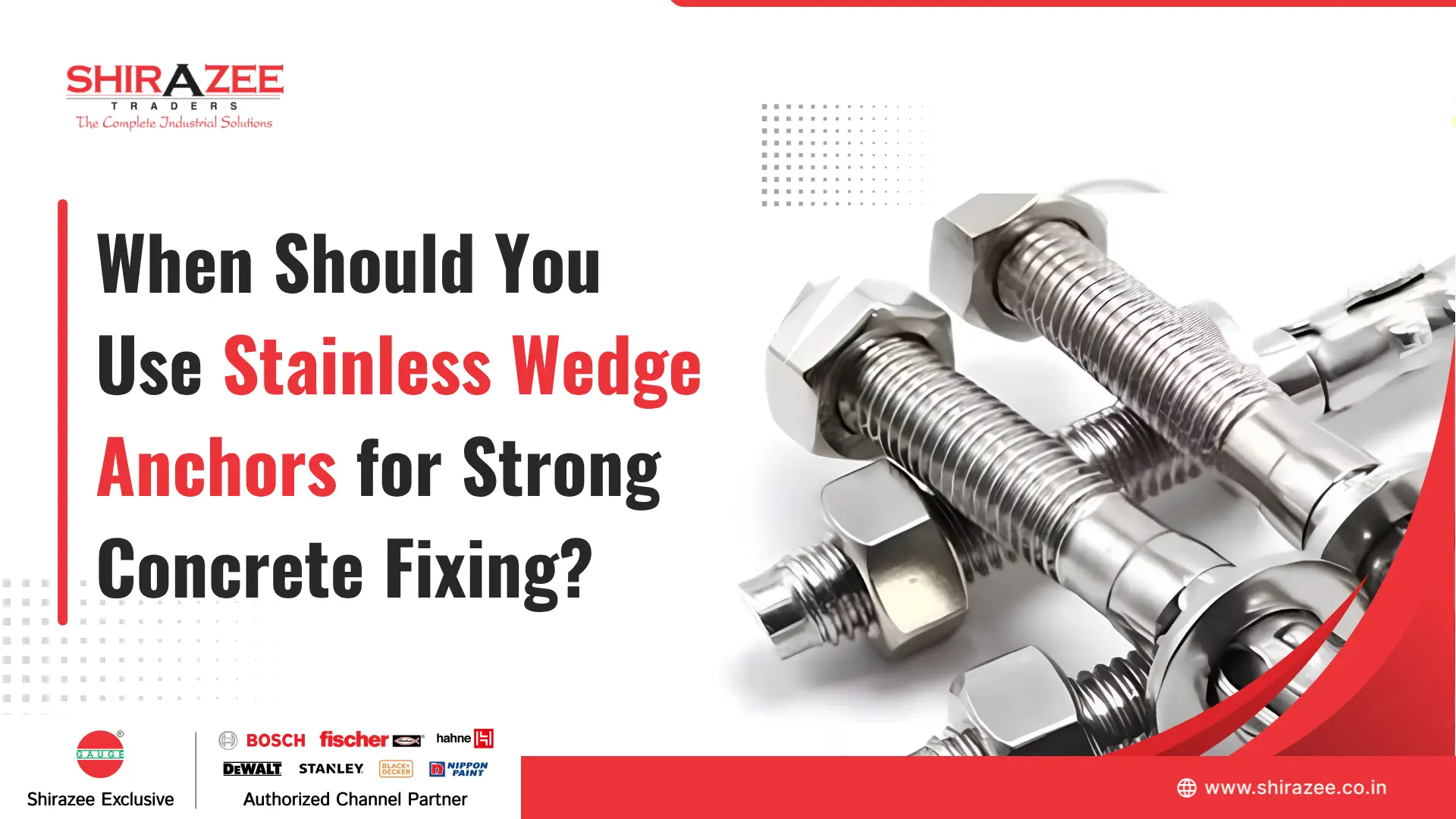
Concrete anchoring is where most fixing decisions actually live, and Fischer covers it from two directions. For mechanical anchoring the Fischer FAZ II wedge anchor handles cracked and non cracked concrete with a range that runs from M6 up to M24, giving engineers flexibility across light fixtures and heavy structural brackets alike. The M6 variant needs only a 40 mm anchoring depth which matters when working around tight rebar layouts or shallow slabs.
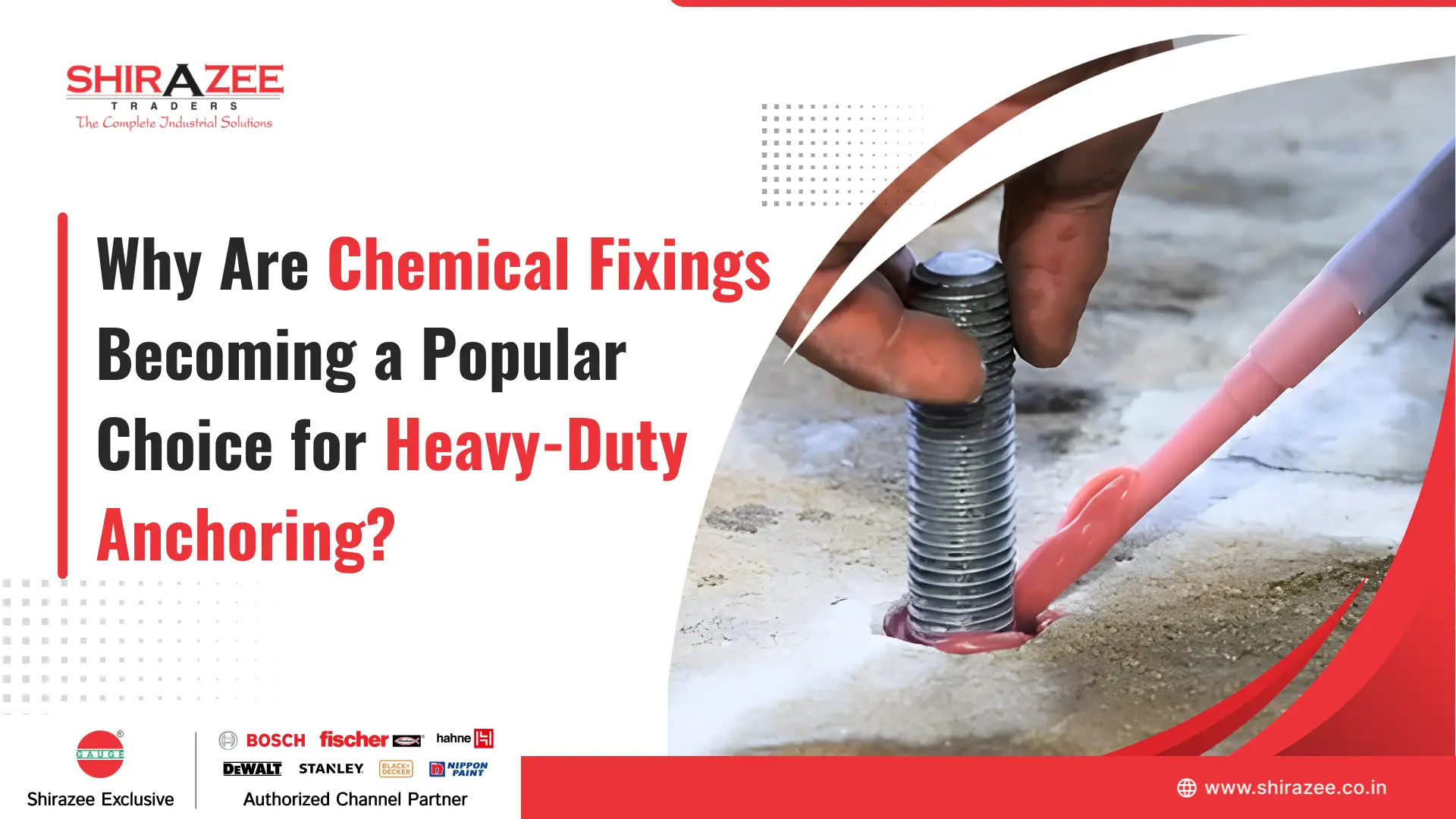
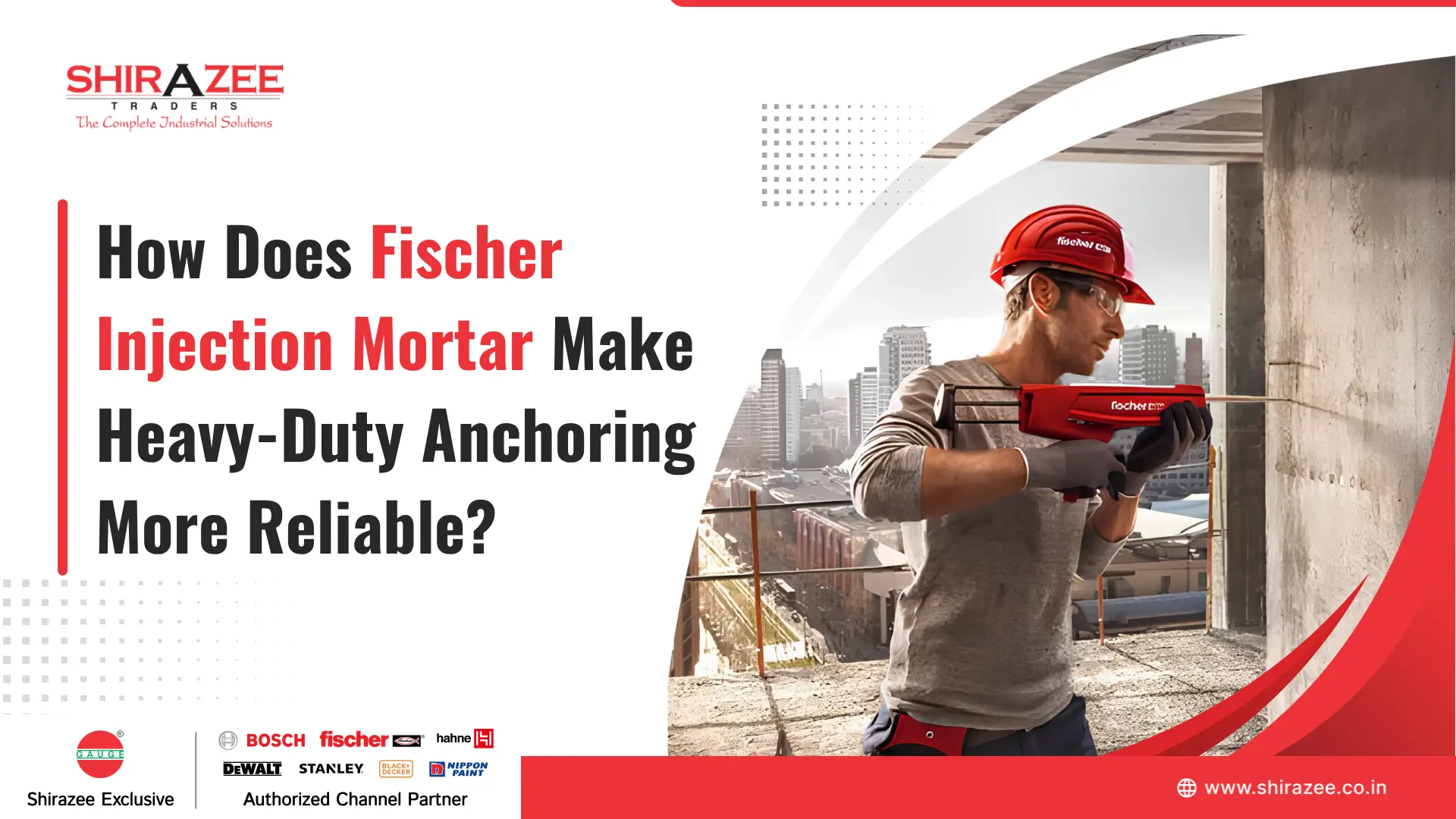
For rebar connections, structural strengthening, or situations calling for adjustable anchorage depth, Fischer FIS EM Plus Mortar is the chemical anchoring option. It is approved for rebar diameters from 8 mm to 40 mm and its ETA assessment confirms a service life of 100 years with an independent expert report suggesting performance up to 120 years under the right conditions. On Rakesh’s site, the structural engineer had already specified FIS EM Plus for a rebar dowelling section where drilling depth and load transfer needed precise control a detail the contractor’s alternate quote had quietly left out.
Fischer Solutions for Facade, Frame and Insulation Mounting
Facades bring a different problem entirely. Every bracket, rail, or console fixed through external insulation creates a potential thermal bridge unless it is handled correctly. Fischer addresses this with thermally separated standoff systems, often referred to in the range as Fischer thermal break mounts, built around a self tapping cone that cuts through render and insulation during installation and interrupts the cold path without needing a separate setting tool.
This is exactly the detail that separates a facade that performs on paper from one that performs in winter. When Rakesh’s team fixed a signage bracket through the building’s ETICS layer, the installer used this thermal break approach rather than a standard bolt straight through the insulation, avoiding a cold spot that would otherwise have shown up on the first thermal imaging inspection.
Top Fischer Universal Plugs for Masonry and Drywall
Not every fixing job involves structural loads. Somewhere on every site, someone is mounting a cabinet, a shelf, or a wash basin bracket, often into a wall that changes substrate halfway across the room. This is where Fischer wall plugs, and specifically the Fischer duopower universal plug, earn their keep. DuoPower is a two-component plug that automatically activates one of three functions, expanding, folding, or knotting, depending on whether it meets solid concrete, brick, aerated block, or plasterboard.
For an installer working through a renovation where the wall composition is inconsistent from one meter to the next, that adaptability saves time and prevents the guesswork of stocking three different plug types for what should be one straightforward job.
Fischer Products for Passive Fire Protection and Firestopping
Fixing systems and fire safety are more connected than most people assume. Every penetration through a fire-rated wall or floor, whether for cabling, piping, or a structural bracket, needs to preserve the compartment’s fire rating once the fixing is in place. Fischer’s approach here focuses on compatible sealing and anchoring solutions that support passive fire protection strategies rather than compromise them. Because fire ratings and product-specific approvals vary by application and jurisdiction, this is one area where a project team should always confirm current specifications against the manufacturer’s datasheet before finalising a fire-stopping design.
Choosing the Right Fischer Product by Substrate and Load
With so many options on the table, how does a project manager actually choose? The honest answer is that it comes down to three questions asked in order. What is the substrate, solid concrete, hollow block, masonry or insulated facade? What is the load, static or dynamic and how heavy? And what is the exposure, indoor, outdoor, or somewhere the fixing needs to resist moisture or corrosion over time?
Answer those three questions and the product range narrows considerably, Rakesh’s facade package needed exactly this sequence. Structural brackets on solid concrete pointed toward FAZ II. Rebar connections pointed toward FIS EM Plus. Insulated sections pointed toward thermal break mounts. None of it required improvisation once the substrate and load were clear.
What Sets Modern Fischer Fixing Systems Apart
What keeps Fischer relevant on modern sites is the pace of refinement behind familiar products. Anchors now come in corrosion resistant steel grades for exposed or coastal applications, approvals increasingly cover diamond drilled and water filled holes useful on retrofit projects where core drilling is unavoidable. Seismic performance categories are built into product approvals rather than treated as an afterthought, none of this is flashy but it is exactly the kind of incremental engineering that keeps heavy duty fixing solutions dependable across decades not just through the warranty period.
Building With the Right Fixing, Every Time
Rakesh walked into his client meeting with one list instead of three, and a reason behind every item on it. That is really what choosing between Fischer products comes down to. It is not about picking the most familiar name off a supplier catalogue. It is about matching the anchor, mortar, plug, or mount to the substrate and load actually in front of you. If your next project has a fixing decision that feels more complicated than it should it is worth pulling the datasheet before the site meeting, not during it.
FAQs
Which Fischer chemical anchor is best for structural rebar connections?
FIS EM Plus is the chemical anchoring mortar built specifically for rebar connections, supporting diameters from 8 mm to 40 mm with adjustable anchorage depth.
Are Fischer structural anchors ETA approved?
Yes, fischer's structural anchor and mortar systems, including FAZ II and FIS EM Plus carry European Technical Assessment approval and specific variants also hold additional certifications depending on the application. Always check the current datasheet for the exact approval relevant to your product size and use case.
Which Fischer product is designed for mounting fixtures through exterior insulation?
Fischer's thermal break standoff systems are designed for this, using a self tapping cone that interrupts the thermal bridge while fixing through ETICS or insulated facades.
How do I match the correct Fischer anchor size to my structural load requirement?
Start with the substrate and load type, then consult the specific product's technical datasheet which lists approved diameters anchorage depths and load values for that exact application. A structural engineer should confirm the final selection for load bearing installations.