
Rakesh thought he had found a shortcut. One quiet Sunday, he wheeled the site’s heavy pressure unit into his building’s parking lot, aimed the narrow jet at his hatchback and watched a week of cement dust disappear in seconds. Then a flake of paint lifted from a stone chip on the bumper, and the front tire showed a pale scuff it never had before. A car washer can save you time and water, but only when the machine and the method suit the vehicle. So what separates a safe wash from an expensive one?
The Weekend Wash That Left More Scratches Than Shine
Rakesh’s story is more common than most owners admit. Plenty of us still trust the bucket and sponge, and that routine carries its own hidden cost, the effects are small, but they are long lasting. The first pass lifts grit from the panel, and every pass after that drags the same grit across the paint. Fine swirl marks build up slowly, so nobody links them to the Sunday ritual.
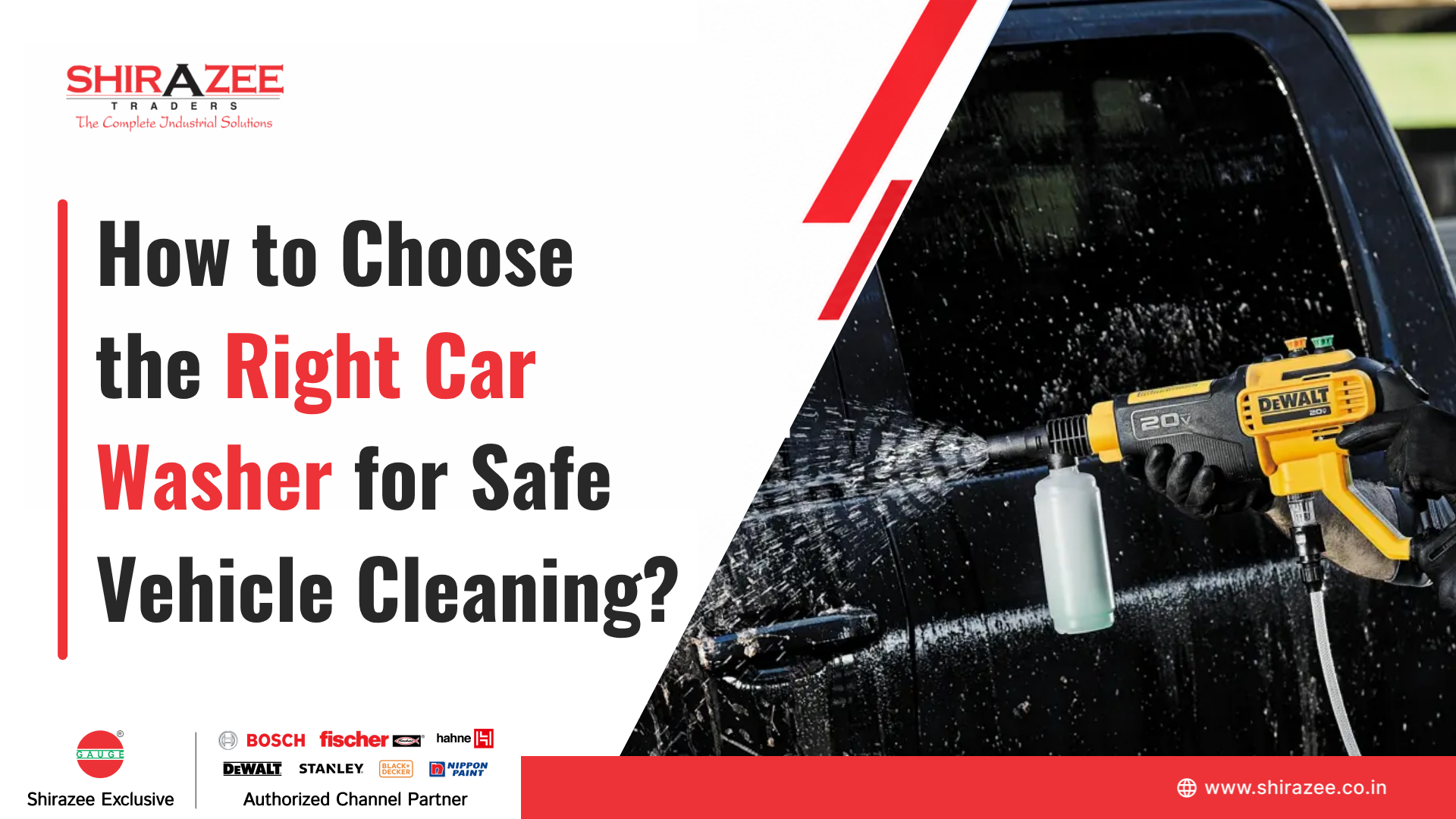
A car washer fixes the first half of that problem. It is an electric machine that takes ordinary tap water, raises its pressure with a pump, and releases it through a nozzle, so the water loosens and carries dirt away before anything touches the paint. Rakesh’s trouble came from the second half. The unit he borrowed was built to blast concrete off shuttering plates, not to rinse a car. A car pressure washer designed for vehicles works on the same principle, yet it gives you far more control over how that force reaches the surface.
Inside the Machine That Turns a Garden Tap Into a Precision Tool
Every high-pressure car washer follows a simple yet effective method, water enters through an inlet and a small filter, a motor drives the pump, and the pump pushes that water through a reinforced hose to a trigger gun and lance. The nozzle at the end decides how the energy spreads, as a wide fan, a rotating jet or a narrow pencil stream.
The jump in pressure is substantial. One leading manufacturer notes that a garden tap usually supplies water at around 4 bar, while its home machines can reach up to 160 bars. Because the jet is so concentrated, these machines also tend to use less water than an open hose. Manufacturers estimate savings of up to 80% under their own test conditions so treat that figure as a guide rather than a promise.
Demand keeps rising with the number of vehicles on Indian roads. SIAM data shows passenger vehicle wholesales reached 46,43,439 units in FY 2025-26 up 7.9% from the previous year. More cars in society parking and on project sites mean more owners and fleet managers weighing up their own car washing machine. Buying raw power is the easy part. Choosing it well is where most people slip.
Five Questions to Ask Before You Bring a Car Washer Home
Rohan, Rakesh’s project manager, faced this decision a few weeks later. He needed one machine for his family SUV and for the site pickups that return every evening coated in mud and cement dust. Instead of starting with the biggest number on the box, he started with five questions.
How often will you wash and how dirty does it get?
A car that collects city dust once a week needs gentle rinsing while a pickup that crosses an excavated site daily needs more cleaning effort and a sturdier machine, Rohan soon saw that his SUV set the limit for gentleness while the pickups set the bar for durability. A tight wash can easily scratch the paint and can cause micro damage.
Where will the water come from?
Most units connect to a tap, but some can also draw water from a bucket or storage tank. That self-priming ability matters in buildings with irregular supply and on sites that rely on tankers.
What power supply will you use?
Check the motor rating, the cable length, and the nearest grounded socket. Long sessions on dirty site vehicles also call for a machine that can keep running without overheating.
Where will it live between washes?
Weight, wheels, a handle and onboard storage decide whether the machine comes out every week or gathers dust in a corner.
Can you get spares and service nearby?
Nozzles, hoses and seals wear out with use. Genuine parts and dependable service keep any vehicle cleaning equipment working long after the purchase price is forgotten.
Finding the Pressure Sweet Spot for Paint, Glass and Rubber
Pressure grabs the attention, yet it tells only half the story, there are more characters in the story as well like the bar measures how hard the water strikes, while flow rate measures how much water carries the dirt away. A good pressure washer for car use balances the two, so you loosen grime without hammering the surface.
UK tire safety body TyreSafe advises motorists to use a light to medium duty washer of 110 bar or less and to keep the nozzle at least 20 cm from the tire. Continental recommends the same 20 cm minimum distance. Those numbers point to a bigger truth. Distance and nozzle angle change the force on the surface far more than the rating printed on the machine.
Rohan saw this on his first trial, then he swapped the pencil jet for a wide fan, stepped back and worked steadily along the pickup’s side panels, the mud still came off, and the paint stayed intact. That is what controlled high pressure vehicle cleaning looks like in practice.
Features That Separate a Useful Car Washer Machine From a Garage Ornament
Once you know the pressure you need the features decide how easily you can use it well. A few details separate a dependable car washer machine from one that ends up as a garage ornament.
Nozzles that change with the job
A fan spray suits painted panels and glass. A rotary jet helps with wheel arches and the underside of a muddy bumper. A multi setting nozzle lets you switch without hunting for attachments. Although the narrow pencil jet should stay well away from tires and paint, these small steps can keep your paint safe in the long run
A foam or detergent attachment
Pre-soaking loosens grit before the rinse washes it off so fewer cloth passes touch the paint; fewer passes mean fewer swirl marks.
Pump build and reach
A metal pump copes better with regular use; an inlet filter keeps debris out of it, and a decent hose length lets you circle an SUV without dragging the machine behind you.
As a reference point, the Bosch Universal Aquatak 130, a well-known Bosch car washer, lists a 1,700 W motor, 130 bar maximum pressure, a 3 cylinder all metal pump, a 6 m hose, a 3 in 1 nozzle with fan, rotary and spot jet settings, and a 450 ml high pressure detergent nozzle. Remember that maximum pressure is a ceiling, not a setting you must use. Specifications like these give you a practical benchmark when comparing any car cleaning machine.
A Safe Washing Routine That Protects You and Your Vehicle
Good equipment still depends on good habits, because a pressure jet can injure skin as easily as it strips mud, a 2025 study of US emergency department records from 2012 to 2021 found that pressure washers accounted for about 90% of the high-pressure injection injuries it examined. A simple routine keeps both the operator and the vehicle out of trouble.
- Dress for the job, wear closed shoes and keep children and pets well away from the spray.
- Respect the jet, never point it at a person or your own hand, and never clear a blocked nozzle with a finger.
- Keep power dry, use a grounded socket and keep plugs and extension leads out of standing water.
- Work from the top down, presoak, rinse from the roof to the wheels, then dry with a clean microfibre cloth.
- Choose the right hour, soap dries into spots on a hot bonnet, so wash in shade or during cooler parts of the day.
Paint, Tires and the Damage Most Owners Never Notice
Remember Rakesh’s tire? The visible scuff was the smaller worry. German safety organisation DEKRA found that a nozzle held close to a tire at very high pressure can cause damage in as little as five seconds and a tire that looks fine afterwards may still carry tiny perforations that weaken the sidewall. Paint fails in a similar way. A stone chip or a loose edge gives the jet something to grip, and the coating peels from there.
Most of this damage traces back to a handful of avoidable mistakes.
- Spraying too close to chips, badges, decals, or trim edges.
- Holding a narrow jet on one spot of the tyre instead of keeping it moving.
- Aiming straight at the joint between the tyre and the rim, which tyre experts warn against. Continental also cautions that detergents can work their way between the tyre and the rim flange.
- Blasting directly into door seals, parking sensors or the engine bay.
With the right nozzle and distance, a car pressure washer treats paint more gently than a gritty sponge ever could.
Matching the Machine to the Vehicle in Your Driveway
So how do you turn all of this into a decision? Start with the vehicle, not the machine. A hatchback that gathers light city dust needs a compact unit with a good fan nozzle and easy storage. A family SUV benefits from a longer hose and a foam attachment that cuts down on contact washing. Site pickups and fleet vehicles call for a durable pump, steady performance over long sessions and the discipline to keep pressure in check around tires and paint.
Rohan finally chose one mid-range machine with a multi setting nozzle and a foam attachment, it handles his SUV on Sundays and the pickups on weekdays. Rakesh now runs the site washing routine himself and the fan setting has become his default. The right car washing machine was never the strongest one on the shelf, it was the one that matched how their vehicles are actually used.
Cleaner Cars Begin With Smarter Choices
A clean vehicle should never cost you a damaged tyre or a peeling panel. Control matters more than raw power, the right features make safe habits easy and a steady routine protects both the person holding the gun and the car in front of it. Before your next purchase, think about how and where your vehicles actually get dirty. If you would like help comparing models, nozzles or foam accessories for a single car or a full site fleet talk to our team and we will help you find a sensible fit.
Your Car Washer Questions Answered
Can I use a pressure washer to clean my car?
Yes, as long as the machine suits the job. A light to medium duty pressure washer for car use, fitted with a fan nozzle and held at a sensible distance, cleans quickly and safely. Heavy industrial units built for formwork, machinery or concrete are better kept for those tasks, because their force leaves little room for error on paint and rubber.
What pressure is suitable for car washing?
Tyre safety guidance suggests a washer rated at 110 bar or less with the nozzle kept at least 20 cm from the tyre. Beyond the rating, distance and nozzle angle make the biggest difference. A wide fan held back from the surface delivers far gentler force than a narrow jet up close even from the same machine.
Can a pressure washer damage car paint?
It can, if the jet finds a weak spot. Stone chips, decals, badges and trim edges give the water something to lift, and a narrow jet held too close can peel paint from there. A wide fan at a generous distance, kept moving across the panel, keeps that risk low.
How should I use a pressure washer safely?
Start with closed shoes, and keep children and pets clear of the spray. Never aim the jet at people or your own hand and keep plugs and extension leads away from standing water. Presoak the vehicle, rinse from the roof down to the wheels, then dry it with a clean microfiber cloth.
What features should I check when buying a car washer?
Look for adjustable or multi-setting nozzles, a foam attachment, a durable pump with an inlet filter and a hose long enough to reach around your vehicle. Check the cable length and storage options too. Finally, confirm that genuine spares and service are easy to find. Nozzles, hoses and seals wear with use and good support keeps a car washer machine working long after the purchase.