
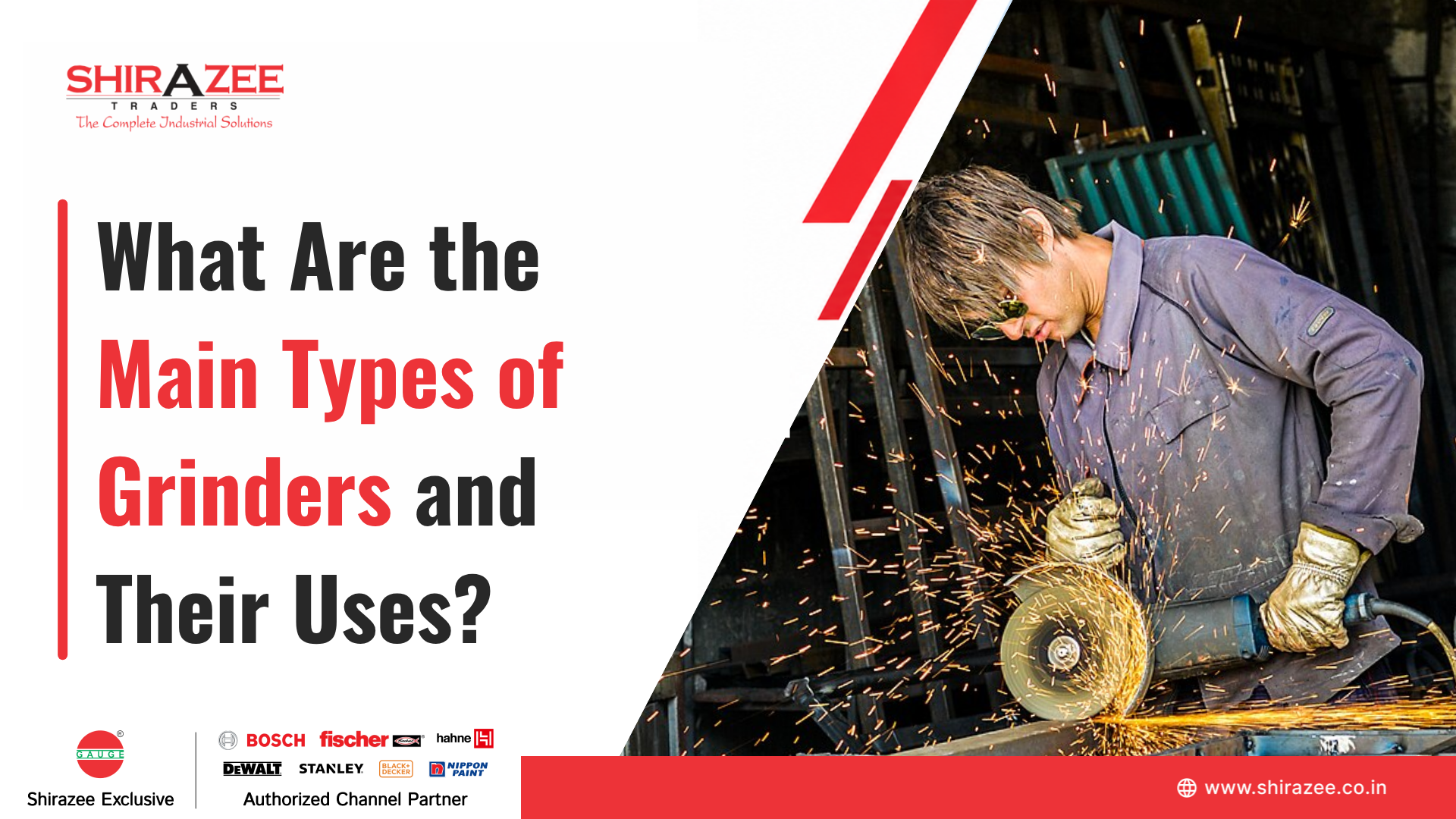
Rakesh had one job left before lunch. He needed to clean up the weld inside a narrow steel bracket for a pipe support on a Pune warehouse site, so he reached for the angle grinder he had been using all morning. Ten minutes later, the disc had chewed into the edge, the corner weld was still rough and the bracket went into the scrap pile. The grinder worked perfectly. It was simply the wrong one, and knowing the types of grinders on your site is what separates a quick fix from a costly redo.
One Grinder, Five Jobs and a Pile of Rework
Think about what a grinder gets asked to do in a single week on a typical construction or fabrication site. On Monday it cuts threaded rod and angle iron. On Tuesday it strips weld spatter off a column base, by Wednesday someone needs a blunt chisel sharpened Thursday brings a stack of drilled plates that need deburring, and Friday ends with surface prep on concrete before the coating crew arrives.
That is five very different jobs. When one tool handles all of them the cost shows up fast. Discs wear out sooner than expected, and surfaces get gouged and need filling, work slows in tight spots and operators take risks to make a tool reach where it was never meant to go.
Rohan the project manager, never saw Rakesh’s bracket hit the scrap pile. He saw it later as a line on the weekly report, replacement material, two extra hours of labour and a support frame that slipped a day behind schedule. Repeat that across a few months and the real question becomes clear. Do you have the right grinder types on site or just the most familiar one? Because if you had one, your budget would not have been utilised in replacing and your precious time would not have been lost.
Meet the Grinder Family Before You Buy Another One
The grinder family is smaller and simpler than most catalogues make it look. It helps to sort the tools by how you use them.
Handheld tools are the ones you carry to the work, and the angle grinder and die grinder belong here. Workshop tools stay in one place while you bring the work to them, which covers the bench grinder and the belt grinder. Then come the precision machines, the surface grinder and the cylindrical grinder, which sit more comfortably in a machine shop than on a construction site.
Why does this matter more today than it did a decade ago? Part of the answer is dust. Grinding concrete, masonry and stone releases fine crystalline silica and safety expectations around it have tightened. In the United States, OSHA’s construction standard limits respirable crystalline silica exposure to 50 micrograms per cubic metre, averaged over an eight hour working day and it lists grinders among the tools that create this exposure. Indian sites are not bound by OSHA, but many contractors and clients now treat these benchmarks as a practical safety reference.
Buyers are also looking harder at cordless and variable speed models and at safety features such as kickback control. Choosing between types of grinders is no longer only about motor power. Control, dust and operator safety now carry just as much weight.
With that map in hand, it makes sense to start with the tool almost every site already owns.
The Angle Grinder Earns Its Place in Every Toolbox
The angle grinder gets its name from the disc, which sits at a right angle to the motor. That simple layout makes it the most versatile handheld grinder on site. Fit a cutting disc and it slices through rebar, threaded rod and angle iron. Swap to a grinding or flap disc and it removes weld beads, rust and old paint. With a diamond cup wheel, it prepares concrete surfaces for coatings and toppings.
Disc size changes how the tool behaves. Smaller grinders spin faster and handle detail cutting and finishing comfortably. Larger models turn more slowly but deliver the torque needed for heavy cutting. One rule never changes and it matters most of all. OSHA guidance states that the spindle speed of the machine must not exceed the maximum operating speed marked on the wheel, a disc pushed beyond its rating can shatter and the fragments travel fast.
Good practice is straightforward, keep the guard fitted and positioned between you and the disc. Use the side handle so both hands control the tool. Pick a disc made for the material in front of you and use water or dust extraction whenever the job involves concrete or masonry.
On Rakesh’s site, the angle grinder is the right call for cutting threaded rod to length and trimming angle iron for the support frame. It is fast, portable and accurate enough for that work. The bracket needed something different, though and before we get to it, the site workshop deserves a quick visit.
Why a Bench Grinder Still Matters in a Modern Workshop
Every site storeroom or fabrication shed benefits from a bench grinder. It is a motor bolted to a bench or pedestal with a wheel on each side, usually one coarse and one fine. Its main job is sharpening chisels, drill bits, punches and cutting tools, and it also shapes small metal parts by hand.
It sounds modest yet the value adds up quickly. Sharp tools cut faster and need less force. They also slip less often, which makes them safer to use. Regular sharpening stretches the working life of tooling that would otherwise end up in the bin.
Setup decides whether a bench grinder is safe or dangerous. The work rest should sit no more than 1/8 inch from the wheel, so the workpiece cannot get jammed between the rest and the wheel. The tongue guard at the top of the wheel opening should be adjusted as the wheel wears, so the gap never exceeds 1/4 inch. Ring test new wheels before mounting them, and stand to one side when you switch the machine on.
Rohan’s team picked up this habit after one too many chisel orders. Instead of buying new masonry chisels every month, they now dress the old ones on a bench grinder in the site store. It is a small change that keeps the budget and the work moving.
Tight Corners and Fine Detail Belong to the Die Grinder
Now back to Rakesh’s bracket. The tool he needed was a die grinder, a slim, pencil shaped grinder that holds small rotary burrs, mounted points and polishing bits in a collet. Where an angle grinder’s disc cannot fit, a die grinder slips straight in.
It deburrs drilled holes, cleans welds in inside corners, smooths cut edges and polishes small areas. Fabricators use it for shaping and porting and maintenance crews reach for it when they need to work inside a housing or around a flange.
Speed is what makes it work. Small burrs need very high rotation to cut cleanly, so die grinders run much faster than a typical angle grinder. That speed is also why the same accessory rule applies here. Use burrs and points rated for the tool’s maximum speed, hold the grinder with both hands and let the burr do the cutting instead of pushing hard.
If Rakesh had used one that morning he would have cleaned the inside weld in minutes without touching the bracket edges. The part would have gone onto the support frame rather than into the scrap pile.
The Belt Grinder Is Built for Flat, Clean Edges
Some jobs need a steady even finish across a wider area and that is where the belt grinder comes in. Instead of a disc or wheel, it runs a continuous abrasive belt over rollers. You press the workpiece against the moving belt to flatten faces, square edges add bevels or blend welds.
A belt spreads the cut over a larger surface than a disc does. It removes material evenly and leaves a more consistent finish. It also tends to run cooler on the workpiece, which helps when heat could distort thin metal or spoil a surface.
Choose the grit for the stage of work, coarse for shaping and finer for finishing. Keep the belt tracking straight on the rollers, and control the dust, especially in an enclosed shed.
In the same fabrication yard, the crew preparing base plates for Rohan’s support frame uses a belt grinder to square the edges before welding. Clean, square edges fit up better, and better fit up means less filler and less rework.
Where Workshop Grinders End and Grinding Machines Begin
Every tool so far relies on a skilled hand to guide it. Industrial types of grinding machines work differently. They hold both the workpiece and the wheel in a fixed, controlled setup, which lets them produce precise dimensions and finishes that no handheld tool can match.
Two grinding machine types come up most often. A surface grinder moves the workpiece back and forth beneath a rotating wheel to create flat, accurate surfaces on plates, dies and machine components. A cylindrical grinder rotates round parts such as shafts and pins against the wheel to finish them to tight diameters.
For most contractors, these machines sit with a machine shop or manufacturer rather than on site. Knowing the difference still saves time. If a part needs precise flatness or a finished shaft diameter, no amount of skill with an angle grinder will get you there, and the job belongs with a shop that runs these machines. Our earlier guide on grinding machines and their industrial applications covers them in more depth.
Matching the Grinder to the Job Before You Switch It On
So how do you decide what to reach for? Start with a few simple questions before the tool comes out of the box. What material are you working on? Is the job cutting, finishing, shaping or sharpening? How much room is there around the workpiece, and will the work happen on site or in the workshop? Finally, will it raise concrete or masonry dust?
The answers usually point to one tool. Cutting and heavy grinding on site suit an angle grinder. Tight spaces and fine detail call for a die grinder. Sharpening belongs on a bench grinder, while flat faces and square edges belong on a belt grinder.
A few habits keep the work clean and safe:
- Match every disc, wheel and burr to the tool. The speed rating on the accessory should meet or exceed the tool’s maximum speed.
- Inspect discs before each shift. Cracks, chips or damp storage are all reasons to discard one.
- Use variable speed for mixed materials. Slower speeds help with heat sensitive metals and finishing work.
The mistakes that cause the most trouble are just as predictable:
- Removing the guard for better reach. If the guard gets in the way, you probably need a different tool.
- Grinding with a cutting disc. Thin cutting discs are not built for side pressure and can break.
- Forcing the tool. Heavy pressure slows the motor and overheats the work, so let the abrasive cut.
- Skipping dust control on concrete and masonry, even for a “quick” job.
Rohan summed it up after the bracket episode. A small, mixed set of grinders costs less than repeated rework, and it keeps crews from improvising with the wrong tool.
The Right Spin Starts With the Right Question
Every grinder covered here solves a specific problem. The expensive mistake is rarely a bad tool. It is forcing a good tool into a job it was never designed to do. Rakesh’s crew now keeps an angle grinder, a die grinder and a bench grinder ready, and the bracket problem hasn’t come back.
The next time a job lands on your list, ask what it actually needs before you plug anything in. If you’d like a second opinion on the right grinder kit for your site or workshop, talk to our team about the work you do, and we’ll help you match the tool to the task.
Frequently Asked Questions
What is an angle grinder used for?
An angle grinder cuts, grinds and prepares surfaces on metal, tile and concrete. The disc you fit decides the job: a cutting disc for rebar and angle iron, a grinding or flap disc for weld beads and rust, and a diamond cup wheel for concrete surface prep. Always check that the disc is rated for the tool’s speed before you start.
What is a bench grinder used for?
A bench grinder sharpens chisels, drill bits, punches and other cutting tools, and it shapes small metal parts from a fixed workstation. It is a simple way to extend the life of site tooling instead of replacing it. Keep the work rest and tongue guard properly adjusted, because a poorly set bench grinder is where many workshop injuries start.
What is a die grinder used for?
A die grinder handles detail work such as deburring drilled holes, cleaning welds in inside corners, smoothing cut edges and polishing small areas. Its slim body and small burrs reach spaces where an angle grinder’s disc cannot fit. It runs at high speed, so use burrs and mounted points rated for the tool.
What is the difference between a grinder and a grinding machine?
A grinder is usually hand guided, portable and suited to a wide range of site and workshop jobs. A grinding machine holds both the workpiece and the wheel in a fixed setup, which gives precise and repeatable results. The two most common grinding machine types are the surface grinder, which produces flat, accurate surfaces, and the cylindrical grinder, which finishes shafts and round parts to tight diameters.
How do I choose the right grinder?
Start with four questions, what material you are working on, what the task involves, how much space surrounds the workpiece, and whether the job will raise concrete or masonry dust. Your answers will usually point to one of the main grinder types. Then match the tool’s speed and accessory size to the job, and add dust control wherever concrete or stone is involved.