
Rohan had a revised drawing on his desk and a problem on his site. The client wanted a mezzanine slab tied into columns that had been cast three months earlier in their Pune commercial building. The tenant’s fit out date was fixed, the columns were already plastered on two sides and nobody wanted to talk about breaking concrete. Rakesh, his site engineer, looked at the finished columns and asked the obvious question. How do you connect new steel to old concrete without weakening what already stands?
Most sites run into this question sooner or later, and it rarely arrives at a convenient time. Rebaring services answer it through a precise routine of scanning, drilling, cleaning and bonding, most of which disappears from view once the job is done. When the crew gets every step right a building can expand or change shape and still keep its full strength. When steps get rushed, the result is a slab that looks complete yet falls short of the load it was meant to carry. Those small details make all the difference and this guide explains each one.
When the Drawing Changes After the Concrete Has Set
Rebaring is the process of fixing new reinforcement bars into concrete that has already hardened. A crew drills holes at planned positions, cleans them thoroughly, fills them with a structural injection mortar and sets the bars in place. Once the mortar cures, the new bar bonds with the existing member and works as part of the structure. Engineers call this post installed rebar, while most people on site simply call it concrete rebaring.
Rohan’s situation is far from rare. Designs change after the pour. A starter bar gets missed during casting. A client decides to add a floor, a canopy or a lift shaft. Someone cuts a new opening in a slab and the edges suddenly need extra steel. Each time, the site faces the same pressure. The schedule keeps moving, the concrete stays exactly where it is and there is a strong temptation to improvise with whatever chemical sits in the store. That improvisation is where reinforced concrete work usually starts to go wrong.
Why the Steel You Add Later Matters as Much as the Steel You Cast
A cast in bar gets its grip from fresh concrete poured around it. A post installed bar has no such advantage. Its entire load passes through a thin layer of mortar between the steel and the drilled concrete surface. If that bond is weak anywhere along the hole, the bar can pull out under load well before it reaches its design strength. So concrete reinforcement added later deserves the same engineering care as the original steel. It is a structural connection, not a quick site fix.
This matters more with every passing year in India. According to IBEF, the Union Budget 2026-27 raised the capital investment outlay for infrastructure to Rs. 12.22 lakh crore, an 11.5% increase over the revised estimate for 2025-26. More construction brings more phased work, more extensions and more retrofits and nearly every one of them involves joining new concrete to old.
The benefits explain why rebaring has become standard practice. It avoids demolishing sound concrete. It lets an existing building stay in use while work continues. It saves the weeks that breaking and recasting would cost. Above all it makes structural modification possible on buildings that would otherwise need major rework. Those benefits however depend entirely on how carefully each step is carried out.
From Scan to Cure, How a Rebaring Job Unfolds
Scanning Before the First Hole
A good rebaring job starts with a clear picture of what is already buried in the concrete. Using a rebar scanner or ground penetrating radar, the crew traces existing bars, conduits and cables, then marks drilling points that steer clear of them. On Rohan’s site the scan revealed two planned holes sitting right on top of a main column bar. Rakesh moved them a short distance after a brief call with the structural consultant. That five minute call saved the column’s existing steel from damage.
Drilling to the Engineer’s Depth
Next come the rebar drilling services themselves, the structural engineer specifies the hole diameter and embedment depth, and that depth decides how much bond length the bar receives. Crews use rotary hammer drills for most holes and diamond core drills where they need to pass through dense reinforcement, depth stops and alignment guides keep every hole straight and true. A hole that falls a few centimetres short may look perfectly fine yet it quietly reduces the capacity of the bar inside it.
Cleaning the Hole Properly
This step looks the least important and often turns out to be the most important. Drilling leaves fine dust clinging to the hole walls and that dust sits between the mortar and the concrete like a layer of flour on a baking tray. Mortar manufacturers specify an exact cleaning routine, usually a cycle of blowing out, brushing and blowing out again, or vacuum extraction through hollow drill bits. Skip a round and the bond suffers even when the hole looks clean to the naked eye.
Injecting, Setting and Curing
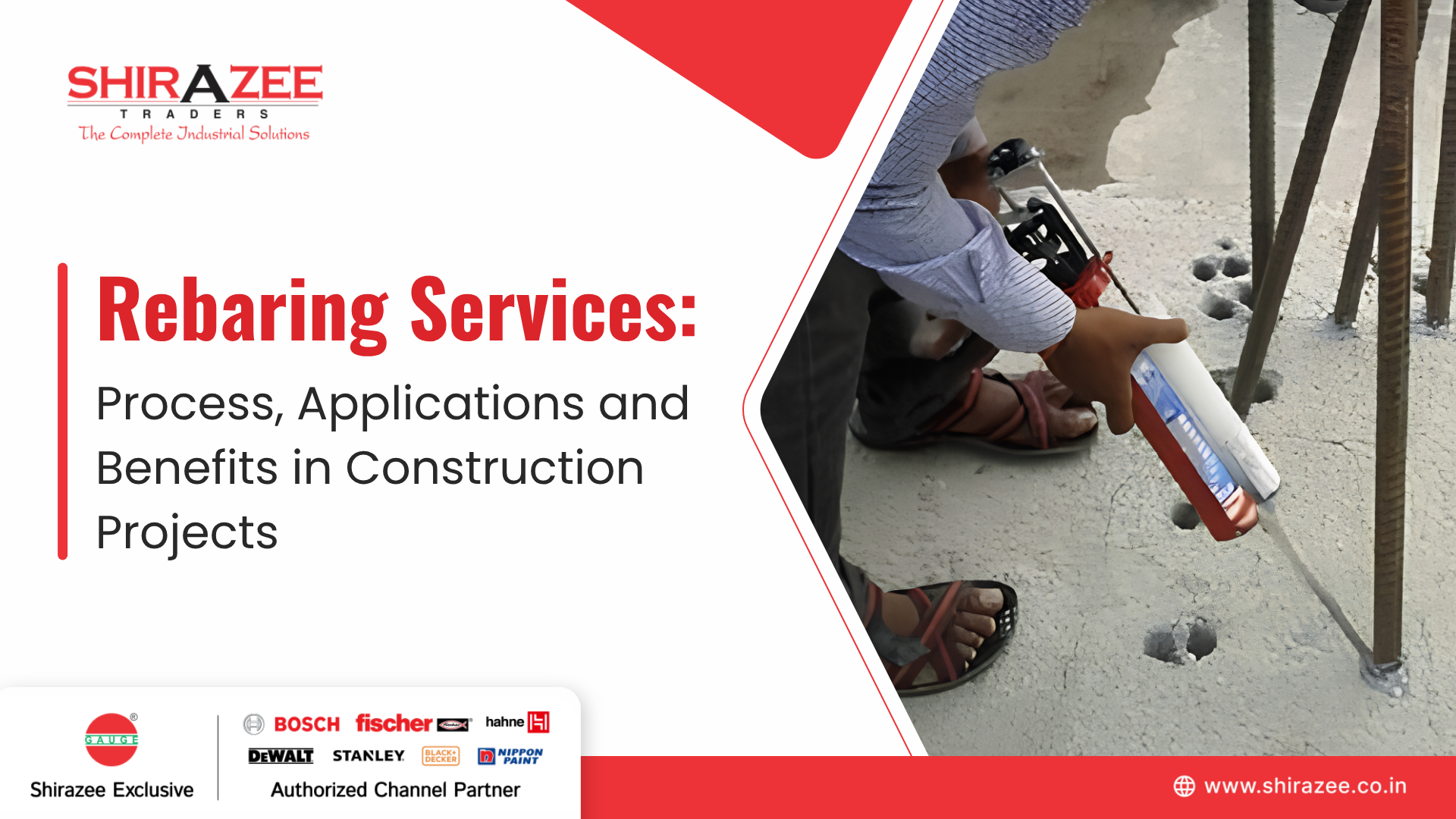
With the hole clean, the installer injects mortar from the bottom of the hole outward so no air gets trapped, then pushes the bar in with a slow twisting motion until it reaches full depth. The bar must stay undisturbed through the mortar’s full curing time, and that time changes with temperature. A cold morning and a hot afternoon on the same site can mean very different waiting periods.
The choice of mortar matters just as much. In Europe, mortar systems for this work are assessed under EAD 330087, the assessment document for post installed rebar connections with mortar, and some approved systems carry an assessed working life of 50 and/or 100 years. Those same assessments state that only suitably trained installers, working under supervision on site, should install the bars. That condition tells you how much the final result depends on the hands doing the work.
Testing Before Handover
The job is not finished until the work has been proven. A reliable contractor runs pull out or proof load tests on a sample of bars to confirm they perform as designed, those results also give the consultant documented evidence before the next pour goes ahead.
The Toolkit Behind Accurate Rebar Drilling
On the first morning, Rakesh noticed that the specialist crew arrived with far more than drills. A complete rebaring kit usually includes the following.
- Rebar scanners or GPR units that map existing steel and services before any drilling starts.
- Rotary hammer drills and diamond core rigs that produce accurate holes at the specified depth.
- Hollow drill bits with dust extractors that drill and clear dust in a single pass.
- Blow pumps, compressed air and wire brushes matched to the hole diameter for thorough cleaning.
- Dispensers, mixing nozzles and extension tubes that allow void free injection in deep holes.
- Injection mortars assessed for rebar connections, rather than general purpose anchoring chemicals.
- Pull out testers that verify the finished installation.
A crew that turns up with only a drill and a cartridge gun is missing most of the job.
Where Rebaring Contractors Get Called In Most Often
Rohan’s mezzanine is one example, but rebaring contractors work across almost every type of project. Building extensions and additional floors need new columns tied into existing ones. Retrofit projects use rebaring for column and beam jacketing, where a new concrete layer wraps around an older member and must act with it. Bridge and flyover widening relies on connecting new deck sections to existing ones. Industrial plants need new machine foundations anchored to existing slabs, and commercial buildings often need fresh openings for lifts and staircases, with added steel around the edges.
Then there are the everyday rescues. Missed starter bars, construction joints in phased projects and late design changes all bring specialist construction drilling services onto sites that never planned for them. As infrastructure spending grows, these situations become a routine part of project planning rather than rare exceptions.
Safety Habits and Costly Mistakes on Rebaring Sites
Drilling concrete creates fine silica dust, and that dust is a serious long term health hazard. The US construction silica standard from OSHA limits worker exposure to 50 micrograms per cubic metre of air, averaged over an 8 hour day, and lists drilling among the tasks that generate this dust. Indian sites follow their own rules, yet this benchmark shows how seriously the hazard deserves to be taken. Dust extraction at the drill and proper respirators protect the crew far better than a cloth tied over the face.
The bars themselves create a second hazard. Under OSHA’s concrete and masonry standard, all protruding reinforcing steel onto which workers could fall must be guarded against impalement. On a rebaring site, freshly installed starter bars often stick out at waist or knee height, so capping or guarding them should happen the same day they go in.
The costliest mistakes are usually quiet ones, crews skip a cleaning cycle because the hole looks clean. They use a general anchoring chemical that was never assessed for rebar connections. They load bars before the mortar has fully cured or they drill without scanning and cut through existing steel. Why would a careful crew take such shortcuts? Usually because of schedule pressure which is exactly why the method needs to be agreed before the work begins.
How to Pick Rebaring Contractors You Can Trust With Your Structure
A low quote looks attractive until you realise that most of the value in rebaring sits in steps nobody sees once the slab is cast. Ask which mortar the contractor plans to use and whether they can show its assessment documents. Check that they scan before drilling and that they submit a method statement before work starts. Confirm that trained installers will do the work under supervision and that pull out testing is part of the scope rather than an extra. References from similar projects help and so does a clear breakdown of scope and pricing.
Rohan summed it up neatly after his project. Ask a contractor how they clean a hole before you ask for their rate.
Stronger Connections Begin Before the First Hole Is Drilled
Rohan’s mezzanine went up on schedule and the new slab now carries its load through bars that are properly bonded to the columns below. Nothing about the result looks dramatic, and that is the point. Good rebaring services come down to precision at every step, from the first scan to the final test. If you have an extension, retrofit or design change coming up, bring a rebaring specialist into the conversation early. A short discussion about scanning, mortar selection and testing now can save far more time and money later.
Questions Contractors Ask About Rebaring
Why is rebaring required in concrete structures?
Once concrete sets, its shape is fixed, but the needs of a building or bridge rarely stay the same. Rebaring ties new slabs, columns, beams or jacketing layers into existing members so they both work as a single unit. It also fixes onsite slips such as missed starter bars, and it makes structural modification possible without breaking out sound concrete. If the connection is poorly bonded the new element can crack, pull away or fail to carry its design load.
Which equipment is used for rebaring?
A complete setup starts with a rebar scanner or ground penetrating radar to locate existing steel and services. Rotary hammer drills or diamond core drills create the holes, and blow pumps, wire brushes or hollow drill bits with dust extractors clean them out. Dispensers, mixing nozzles and extension tubes help inject the mortar without trapping air. Pull out testers then confirm that the installed bars perform as designed. The mortar itself should be a system assessed for rebar connections, not a general purpose anchoring chemical.
What factors affect the cost of rebaring services?
Bar diameter and embedment depth drive drilling time and mortar consumption so larger bars and deeper holes cost more, the number of holes, the condition of the existing concrete and the density of the reinforcement inside it all change how quickly the crew can work. Site access matters too, since work at height or in tight corners needs scaffolding or extra time. The mortar system, the scanning involved and the scope of pull out testing also shape the final figure. When you compare quotes from rebaring contractors check that each one covers the same steps rather than comparing headline rates alone.
How long before a post installed bar can take load?
That depends on the specific mortar and the temperature on site. Every mortar has a working time, during which the bar can still be adjusted and a curing time, after which it can take load. Both usually run shorter in warm weather and longer in cold weather. Always follow the manufacturer's published data and never load or disturb a bar early just because the schedule is tight.