
Electricity costs affect almost every household and business. Yet most consumers have little control over changing tariffs or how their power is generated.
Solar Panel Installation offers a practical alternative. It allows you to produce electricity from an available rooftop, lower your dependence on grid power, and plan energy expenses with greater confidence.
The bigger question is not simply how much solar panels cost today. It is how much value a well-planned system can create over the next 25 years.
When Your Rooftop Starts Producing Power
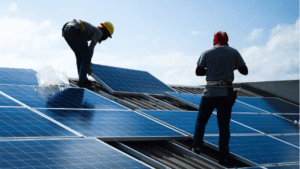
At its core, Solar Panel Installation is the process of setting up a system that converts sunlight into usable electricity.
Solar photovoltaic modules absorb sunlight and produce direct current electricity. A solar inverter converts this electricity into alternating current, which can then power lighting, appliances, machinery, office equipment and other electrical loads.
A complete Solar Power System generally includes solar modules, mounting structures, an inverter, cables, electrical protection devices, a meter and a monitoring system. Battery storage may also be included when the property requires backup power or greater energy independence.
However, not every solar project follows the same design.
A Residential Solar Panel Installation may support household appliances, lighting, cooling systems, and other daily needs. A Commercial Solar Panel Installation may supply part of the daytime electricity required by an office, factory, warehouse, hospital, school or retail building.
Systems can also operate in different ways.
An on-grid system works with the electricity network. An off-grid system operates independently, usually with battery storage. A hybrid system combines solar energy, grid electricity, and batteries.
This is why effective Solar Panel System Installation begins with a proper assessment. The system must match your electricity consumption, available space, roof condition, local sunlight and financial expectations.
Once these factors align, an unused rooftop can become a productive energy asset.
Why Solar Has Become a Serious Investment
Solar energy was once viewed mainly as an environmental choice. Today, households and businesses increasingly see it as a practical investment.
The shift is easy to understand. Electricity demand continues to grow while conventional tariffs can change over time. Consumers who depend entirely on grid electricity have limited protection from future increases.
The solar system changes this relationship.
When you generate electricity on your own property, you reduce the amount of power you need to purchase from the grid. The system cannot remove every electricity expense, but it can give you greater control over a significant part of your energy consumption.
India’s expanding solar capacity also shows how quickly this transition is progressing. According to the Ministry of New and Renewable Energy, India’s cumulative installed solar capacity reached approximately 162.15 GW by June 30, 2026. Solar capacity had grown from about 2.82 GW in 2014 which represents an increase of more than 57 times.
This growth reflects rising demand from utility projects, industries, institutions, businesses, and residential users.
Government programmes, improving technology, better access to installers, and growing awareness have also made Rooftop Solar Installation more accessible. Property owners now have more choices in system capacity, panel type, inverter technology, financing and monitoring.
Still, market growth alone does not make every project a good investment. The real value comes from choosing the right system and using it effectively.
Benefits That Continue for Years
The strongest case for solar becomes clear when we look at its benefits together.
Lower dependence on grid electricity
Solar panels generate power during daylight hours. When your property consumes this electricity directly it draws less power from the grid.
For homes, this can lower monthly electricity purchases. For businesses with high daytime consumption, solar generation may support lighting, cooling, computers, machinery and other operating requirements.
The actual reduction depends on system capacity, weather, energy usage, electricity tariffs and the percentage of solar power consumed on site.
Productive use of rooftop space
Many homes, factories, warehouses, schools, and commercial buildings have large roof areas that serve little practical purpose.
A well-planned Rooftop Solar Installation can turn this space into an electricity generating asset without requiring additional land. This is especially useful for industrial and commercial properties where energy demand is high during daylight hours.
Before installation, the roof must be checked for structural strength, shading, orientation, drainage and maintenance access.
Greater protection from future tariff changes
Grid electricity rates may rise during the operating life of a solar system. Producing part of your own electricity can reduce your exposure to these changes.
Solar does not guarantee the same electricity bill every month. Consumption may increase, weather conditions vary and tariff structures can change. However, each unit generated and used on site is one less unit that needs to be purchased at the applicable grid rate.
That makes solar useful for long-term financial planning.
A long working life
Solar panels can operate for decades when they are properly selected, installed, and maintained. The International Energy Agency states that the average solar panel lifetime is around 25 to 30 years.
Panels may gradually produce less electricity as they age and components such as inverters may need servicing or replacement earlier. Even so, a quality system can continue creating value long after its initial cost has been recovered.
Simple performance monitoring
Modern Solar Energy Solutions often include digital monitoring. Users can check daily generation, monthly trends, inverter status and unexpected performance drops.
This visibility matters. If dust, shading, wiring problems, or equipment faults affect generation, monitoring can help identify the issue sooner.
Support for business sustainability goals
Companies face growing pressure to manage energy costs and demonstrate responsible operations.
A Commercial Solar Panel Installation can reduce the amount of grid electricity used during business hours. It can also support internal sustainability plans and communicate a practical commitment to cleaner energy.
The benefit is not limited to the public image. Lower energy purchases can directly support operating efficiency.
Understanding Savings and Return on Investment
People often ask one question before considering solar.
How quickly will the system recover its cost?
There is no single answer that applies to every property. The return on investment depends on several connected factors.
A solar system creates savings by generating electricity that would otherwise be purchased from the grid. If the system produces power while the property is consuming it, that electricity is used directly. In applicable cases, surplus generation may be exported according to local net metering rules.
Savings accumulate month after month but the total value depends on
- Initial installation cost
- System capacity
- Local electricity tariff
- Daily and seasonal consumption
- Available sunlight
- Roof orientation and shading
- Percentage of power consumed on site
- Financing cost
- Applicable subsidy or incentive
- Maintenance and equipment performance
A home and a factory may install systems of different sizes, but system size alone does not decide the better return.
A household may benefit from residential support schemes where eligible. A factory may achieve strong savings because most of its solar electricity is consumed immediately during working hours. High daytime self-consumption often improves the financial value of a commercial project.
This is why buyers should be careful with fixed savings claims.
A reliable Solar Installation Company should study recent electricity bills, examine the site, estimate annual generation, and explain the assumptions used. It should also show how changes in tariffs, system output, or consumption may affect the expected payback.
A realistic projection is more useful than an attractive number without technical support.
A Cleaner Way to Meet Future Energy Needs
Financial savings are important, but solar also addresses a larger concern.
How can growing energy demand be met without increasing environmental pressure at the same rate?
Solar panels generate electricity without burning fuel at the point of use. During operation, they do not produce smoke or direct carbon emissions. This allows homes and businesses to meet part of their electricity demand through a renewable source.
Solar equipment still requires raw materials, manufacturing, transportation and installation. These activities have an environmental impact. However the electricity generated over the panel’s working life can compensate for the emissions associated with manufacturing.
The International Energy Agency reports that solar panels generally need to operate for about four to eight months to offset their manufacturing-related emissions. This period is small compared with their average operating life of around 25 to 30 years.
Solar also supports distributed generation. Instead of producing all electricity at distant power stations, part of the power is generated close to where it is consumed.
For businesses, solar can form one part of a wider energy plan. Grid electricity, solar generation, battery storage, and backup systems can be combined according to operational needs.
A small home system and a large industrial plant serve different purposes, but both contribute to the same shift towards cleaner and more diverse energy sources.
What to Check Before Installing Solar Panels
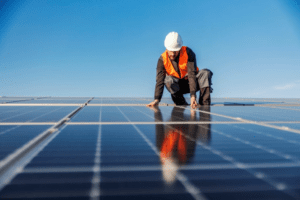
Solar can offer long term value, but the outcome depends heavily on decisions made before installation.
A rushed project may result in poor generation, higher maintenance needs, or unrealistic financial expectations. Careful planning helps prevent these problems.
Review your electricity consumption.
Start by examining at least 12 months of electricity bills. Look at monthly usage, seasonal changes, tariff category, sanctioned load and daytime consumption.
This data helps determine how much electricity the system should produce.
Installing the largest possible system may not always be the right approach. The system should match your actual consumption, roof capacity, budget and local regulations.
Inspect the roof carefully.
The roof must have enough usable area and sufficient structural strength. It should also allow safe access for installation, cleaning, inspection, and repairs.
Check for shade from trees, water tanks, walls, neighboring buildings, or other structures. Even partial shading can affect generation, especially when the system design does not account for it.
Roof age and condition also matter. Repairing or replacing a roof after solar panels have been installed can add avoidable costs.
Select suitable equipment
Do not compare proposals based only on panel wattage.
Review the module technology, inverter specifications, mounting structure, cable quality, electrical protection, monitoring features, product certifications and warranty terms.
Every component affects the safety and performance of the complete Solar Power System.
A high-capacity module cannot compensate for weak structural design, poor wiring, or an unsuitable inverter.
Understand approvals and net metering.
Grid-connected projects may require approval from the local electricity distribution company. The process can include document submission, technical review, inspection, and meter replacement.
Rules can vary by state, consumer category, system capacity, and electricity provider. Confirm the latest requirements before finalizing the project.
Ask for clear generation estimates.
A professional installer should provide an annual generation estimate and explain how it was calculated.
The proposal should consider location, panel orientation, tilt, shading, expected system losses and local weather patterns. It should not promise the same output every month.
Solar generation naturally changes across seasons so estimates should focus on realistic annual performance.
Avoid choosing only by price.
The lowest quotation may appear attractive, but it can exclude essential equipment, safety measures, installation quality, documentation, or after sales support.
Common mistakes include
- Ignoring roof strength and shading
- Selecting a system without studying your consumption pattern
- Accepting unrealistic generation claims
- Using weak mounting structures
- Overlooking electrical protection
- Comparing panels but ignoring inverters
- Installing without proper approvals
- Failing to plan maintenance access
- Choosing a provider without service support
A solar system is expected to work for many years The quality of the installation should reflect that expectation.
Why Choose Shirazee Traders for Solar Installation
A successful Solar Installation requires more than supplying panels.
It involves site assessment, system sizing, technical design, equipment selection, safe installation, testing, documentation, commissioning and ongoing support. When these stages are managed separately without clear responsibility, gaps can affect performance.
Shirazee Traders provides practical Solar Energy Solutions for homes, commercial properties, and industrial facilities. The approach begins with understanding the site and its electricity requirements instead of recommending the same package to every customer.
- Our support can include
- Site and rooftop assessment
- Electricity consumption review
- System capacity planning
- Equipment selection
- Technical design
- Installation coordination
- Testing and commissioning
- Guidance on approvals
- Performance monitoring support
- After sales assistance
For larger projects, professional Solar EPC Services bring engineering, procurement and construction under a coordinated process. This helps maintain consistency from the initial survey to final commissioning.
The goal is simple. The system should be safe, suitable for the property, and capable of producing realistic long-term value.
Would a standard package deliver that result for every roof and every business? Usually, it would not.
A household with evening focused consumption has different needs from a factory operating throughout the day. A warehouse with a clear flat roof requires a different design from a building with multiple shaded sections.
Careful planning makes those differences part of the solution.
A Practical Step Towards Energy Independence
Solar Panel Installation can lower grid electricity purchases, make better use of rooftop space, and support cleaner energy generation. Its long operating life also gives homeowners and businesses an opportunity to create value over many years.
However, strong results depend on correct system sizing, quality equipment, safe installation, and realistic performance estimates.
Thinking about investing in solar? Contact Shirazee Traders for a professional site assessment and find the right solar solution for your property, electricity needs, and long-term goals.
Frequently Asked Questions
How much can I save by installing solar panels?
Savings vary according to system size, local electricity rates, daytime consumption, site conditions, financing, and net metering rules. A site-specific assessment offers a more reliable estimate than a general savings figure.
What factors should I consider before installing a solar panel system?
Review your electricity bills, roof strength, usable space, shading, system size, equipment quality, warranties, approvals, safety measures and after sales support before proceeding.
How long do solar panels last?
The International Energy Agency reports an average solar panel lifetime of around 25 to 30 years. Panels may continue operating beyond this period although their output can gradually decline over time.
How do I choose the right solar panel installation company?
Choose a company that conducts a proper site survey, explains system sizing, uses certified equipment, follows electrical safety practices, provides realistic generation estimates, supports documentation and offers dependable after sales service.