
Manufacturing has seen a dramatic change over the last decade. Customers expect higher quality, faster delivery, and products that meet exact specifications every time. At the same time, manufacturers face rising production costs, skilled labour shortages, and increasing pressure to improve efficiency.
This is where Grinding Machine Technology is making a significant difference.
Modern grinding systems are no longer just machines that remove material from a workpiece. They have become intelligent production tools capable of delivering exceptional precision, automation, and productivity. From automotive components to aerospace parts and medical equipment, advanced grinding solutions are helping industries meet demands that would have seemed impossible a few years ago.
So what is driving this transformation, and what opportunities lie ahead? Let’s explore.
Why Traditional Grinding Methods Are No Longer Enough
Many manufacturing facilities still rely on older grinding systems that were designed for a different era of production. While these machines may still perform basic tasks they often struggle to keep up with modern expectations.
Think of a production line where operators constantly adjust settings manually, inspect parts repeatedly and stop machines frequently for maintenance, these interruptions increase production time and create inconsistencies that affect product quality which directly affects the business, and you would never want your business to be in that state.
Customers today expect tighter tolerances and flawless finishes. Industries such as aerospace, automotive and medical manufacturing require components that meet exact specifications with no compromise in quality because it can create a situation of life or death for their customers. Even a small deviation can result in rejected parts, delayed deliveries, and additional costs.
At the same time, manufacturers face increasing labour challenges. Skilled operators are becoming harder to find making manual processes less sustainable.
These challenges are pushing businesses to rethink how they approach grinding operations. Instead of treating grinding as a finishing step, many now view it as a strategic process that directly influences productivity, quality, and profitability.
That shift brings us to a bigger question. Why has grinding technology become such an important competitive advantage?
Why Grinding Technology Is Becoming a Competitive Advantage
Manufacturing is becoming increasingly precision driven. Whether producing engine components, industrial tools, bearings, or precision instruments, accuracy is no longer optional.
This is where modern Grinding Machine Technology plays a critical role.
A well-designed Precision Grinding Machine can consistently achieve tight tolerances and superior surface finishes while reducing material waste and production errors. These benefits directly affect both product quality and operational efficiency.
The broader manufacturing landscape is also evolving. Smart factories, connected production systems and digital monitoring are becoming standard across many industries. According to the International Federation of Robotics, there are now more than 4 million industrial robots operating worldwide, with manufacturing accounting for the majority of installations.
This rapid adoption of automation reflects a simple reality, businesses that invest in modern technology are often better positioned to meet customer expectations, control costs and remain competitive.
At the centre of this transformation sits Advanced Grinding Technology, which is increasingly integrated into automated production environments.
Understanding how these innovations work helps explain why the grinding industry is evolving so quickly.
The Innovations Transforming Modern Grinding Machines
Understanding Modern Grinding Machine Technology
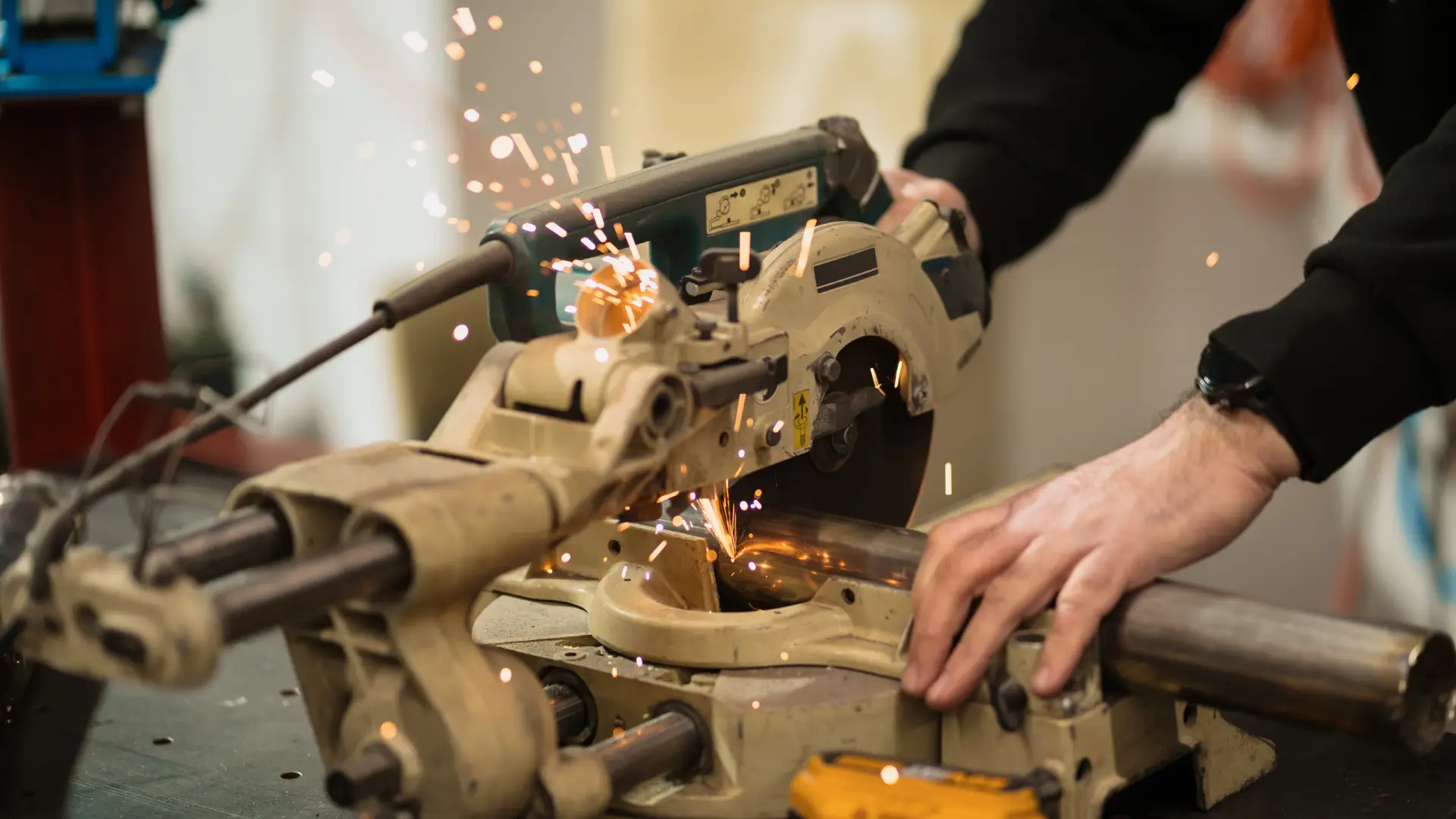
At its core, a Grinding Machine removes material from a workpiece using an abrasive wheel. While the concept remains unchanged, the technology behind modern systems has advanced significantly.
Today’s Industrial Grinding Machine solutions combine mechanical precision with digital intelligence. They can monitor operating conditions, maintain consistent accuracy, and integrate seamlessly with other manufacturing systems.
The result is a process that delivers better repeatability, higher quality, and greater productivity.
For industries where precision matters, these improvements are not simply beneficial. They are essential.
From Conventional Systems to Smart Manufacturing
Manufacturing has moved far beyond standalone machines operating independently.
Modern facilities increasingly rely on connected systems that share data, monitor performance, and optimise production in real time. Grinding equipment has evolved alongside this shift.
Instead of depending entirely on operator experience, today’s machines use sensors, software, and digital controls to maintain consistency throughout production runs.
This evolution supports broader Industry 4.0 initiatives. According to the World Economic Forum, digitalisation and automation technologies can improve manufacturing productivity by 15% to 30%.
For manufacturers, that improvement translates into faster production, lower costs, and more reliable quality.
CNC Grinding Machines Deliver Consistent Precision
One of the most significant developments in the industry has been the widespread adoption of CNC Grinding Machines.
CNC, or Computer Numerical Control, enables machines to perform grinding operations with exceptional accuracy and repeatability. Once programmed, the machine follows precise instructions, minimising variation between parts.
This consistency is especially valuable when producing complex components that require tight dimensional tolerances.
The benefits extend beyond accuracy.
Manufacturers using CNC Grinding Machines often experience reduced setup times, lower material waste, and improved production efficiency. Because the process is controlled digitally, the risk of human error is also significantly reduced.
For businesses focused on Precision Engineering, CNC technology has become an indispensable tool.
Automated Grinding Machines Are Reshaping Production Floors
Automation is changing nearly every aspect of manufacturing, and grinding operations are no exception.
Modern Automated Grinding Machines can perform tasks such as loading workpieces, dressing grinding wheels, inspecting finished parts, and adjusting operating parameters automatically.
This level of automation helps manufacturers address one of today’s biggest challenges, the shortage of skilled labour.
Rather than relying heavily on manual intervention, automated systems can operate continuously with minimal supervision. This improves productivity while maintaining consistent quality.
The growth of Industrial Automation has made these solutions increasingly attractive for industries with high production volumes, particularly automotive and industrial manufacturing.
The next step in this evolution involves making machines even smarter.
AI, Digital Monitoring, and Predictive Maintenance
Artificial intelligence is beginning to influence the future of grinding technology in meaningful ways.
Modern systems can collect data from sensors and analyse machine performance in real time. They monitor vibration levels, temperature changes, wheel wear, and other operational parameters.
This information allows manufacturers to identify potential issues before they lead to equipment failure.
According to McKinsey, predictive maintenance technologies powered by AI can reduce machine downtime by up to 50% and lower maintenance costs by 10% to 40%.
Think about the impact of avoiding unexpected breakdowns during critical production schedules. Reduced downtime means better productivity, improved delivery performance, and lower operating costs.
This capability is becoming increasingly valuable as manufacturing environments grow more complex.
Energy Efficient Grinding Is Driving Sustainable Manufacturing
Sustainability is no longer limited to environmental discussions. It has become a business priority.
Manufacturers are actively seeking ways to reduce energy consumption while maintaining production performance. Modern grinding systems support these goals through improved motor efficiency, intelligent coolant management, and optimised grinding processes.
The International Energy Agency reports that energy efficient electric motors can reduce industrial electricity consumption by up to 10% compared with conventional alternatives.
While a 10% reduction may seem modest at first, the savings can be substantial when applied across large manufacturing facilities operating around the clock.
Lower energy consumption also contributes to reduced operating costs and improved environmental performance.
As these innovations continue to mature, manufacturers have more options than ever before when selecting equipment.
Choosing the Right Grinding Machine for Your Operations
Selecting the right Grinding Machine requires more than comparing specifications.
The first consideration is production volume. A machine suited for small batch production may not deliver the efficiency required for high volume manufacturing.
Material type also plays an important role. Different materials demand different grinding capabilities, wheel configurations, and operating parameters.
Precision requirements should be evaluated carefully. If your products require tight tolerances and superior surface finishes, investing in a high quality Precision Grinding Machine may provide long term benefits.
Automation requirements are equally important. Some operations may benefit from fully automated systems while others may require a balance between automation and manual flexibility.
Finally, consider future growth. Can the equipment integrate with digital manufacturing systems? Will it support evolving production requirements?
Thinking beyond immediate needs often leads to better long term investment decisions.
Best Practices That Maximise Grinding Performance
Even the most advanced equipment performs best when supported by proper operating practices.
A few simple steps can significantly improve results.
- Select grinding wheels that match the workpiece material.
- Follow preventive maintenance schedules consistently.
- Train operators are regularly on machine operation and safety.
- Monitor coolant condition and replace it when necessary.
- Calibrate equipment periodically to maintain accuracy.
- Use production data to identify opportunities for improvement.
- Keep software and control systems updated.
There are also several common mistakes worth avoiding.
- Delaying maintenance until problems occur.
- Using incorrect grinding wheel specifications.
- Ignoring operator training requirements.
- Running equipment beyond recommended limits.
- Overlooking opportunities for process optimisation.
Small improvements often produce significant long term gains.
Looking Ahead to the Future of Grinding Technology
The future of Grinding Machine Technology is being shaped by precision, connectivity, automation, and sustainability.
Manufacturers increasingly need equipment that can deliver consistent quality while adapting to changing production demands. Technologies such as AI driven monitoring, advanced automation, digital integration, and energy efficient operation are becoming central to that goal.
Industry experts also expect continued growth in smart manufacturing investments, the global machine tools market is projected to exceed USD 120 billion by 2030, driven largely by automation and advanced manufacturing technologies.
For businesses evaluating their next equipment investment, the question is no longer whether technology will change grinding operations. The real question is how quickly they can take advantage of these advancements.
The manufacturers that embrace modern grinding solutions today will be better prepared for tomorrow’s production challenges.
If you’re exploring advanced grinding solutions for your operations, now is the perfect time to evaluate how modern technology can improve productivity, precision, and long term manufacturing performance.
FAQs
How do CNC grinding machines improve productivity?
CNC Grinding Machines improve productivity by reducing manual intervention, increasing accuracy, minimising waste, and maintaining consistent quality across production runs.
What industries use grinding machines?
Industries such as automotive, aerospace, medical devices, metal fabrication, tooling, construction equipment, and industrial manufacturing rely heavily on grinding technology.
What are the benefits of automated grinding machines?
Automated Grinding Machines improve efficiency, reduce labour dependency, increase consistency, support continuous production, and help manufacturers scale operations more effectively.
What is the future of grinding machine technology?
The future will focus on smarter automation, AI driven optimisation, connected manufacturing systems, predictive maintenance, and sustainable production practices that improve efficiency while reducing costs.