A fixing can appear secure from the outside and still fail to deliver the required performance. Dust inside the drilled hole, an unsuitable mortar, incorrect curing time or the wrong anchor rod can weaken the entire connection.
This is why chemical fastening requires more than choosing a cartridge from a catalogue. Fischer Chemical products work as part of an engineered system that connects the mortar, fixing element, base material, installation method and expected load.
For construction teams, plant engineers, contractors, and procurement professionals, understanding this system can lead to safer installations, better project planning, and fewer costly corrections.
When an Ordinary Fixing Is Not Enough
Consider a steel structure installed inside a manufacturing plant. The connection may need to carry high tensile loads, withstand vibration, remain reliable in changing temperatures, and fit around existing reinforcement.
A standard mechanical fixing may work in some situations. In others, the project may involve cracked concrete, hollow masonry, restricted spacing or a fixing point close to an edge. These conditions demand a more carefully selected system.
This is where Industrial Chemical Solutions become relevant. Chemical anchors create a bonded connection between the fixing element and the base material. Instead of depending only on expansion pressure, the cured mortar bonds the anchor to the wall of the drilled hole.
However, chemical mortar is not a universal answer to every fastening problem. The result depends on selecting a product approved for the actual substrate, load, temperature, hole condition, and fixing element.
So, what makes these systems increasingly important across construction and industry?
Why Chemical Fastening Matters Today
Modern projects rarely follow a simple sequence in which every fixing point is planned before the concrete is poured. Buildings are renovated, production lines are expanded, solar support systems are added, and structural elements are strengthened after the original construction work is complete.
These changes create demand for reliable Chemical Fastening Solutions.
Chemical systems can support applications such as steel structures, railings, façades, machinery, pipe supports, cable trays, canopies, and post installed reinforcement. The Fischer India range includes different injection mortars for concrete, masonry, cracked concrete, and specialised rebar applications.
Their flexibility is valuable, but it also creates a responsibility. Contractors cannot assume that every resin will perform in every material.
A mortar designed for masonry may not be suitable for a heavy connection in cracked concrete. Similarly, a system approved for static loading should not automatically be selected where vibration, seismic forces, or dynamic loads are involved.
The correct approach begins with understanding how the system works.
How Chemical Anchoring Creates a Strong Connection
A chemical anchoring system normally includes injection mortar, a static mixer, a dispenser, an approved threaded rod or reinforcing bar, and cleaning equipment. In hollow masonry, an anchor sleeve may also be required.
Most Fischer injection mortars use two components stored in separate cartridge chambers. These components remain separate until they pass through the static mixer. The mixing spiral combines and activates them during dispensing.
The installation process generally follows a clear sequence.
First, the installer drills a hole with the specified diameter and depth. The hole is then cleaned according to the product instructions. Mortar is injected from the base of the hole, and the approved fixing element is inserted. The connection must remain undisturbed until the required curing time has passed.
Once cured, the mortar bonds the surface of the anchor to the drilled hole wall. Fischer also states that the mortar seals the drill hole when installed as specified.
This process may sound straightforward, but each step matters. A missed cleaning cycle or early loading can affect performance, even when the contractor uses a high quality product.
It is also important to distinguish chemical anchors from general Industrial Adhesives. Adhesives may be used for bonding, sealing, repair, or assembly. Chemical anchors are designed specifically to create load carrying connections in approved construction materials.
What Makes Fischer Chemical Systems Different
The main strength of Fischer Chemical Solutions lies in the range of systems available for different applications.
Fischer offers injection mortars based on vinyl ester, epoxy, polyester, and other specialised formulations. These products cover applications in cracked concrete, non cracked concrete, solid masonry, hollow masonry, aerated concrete, and post installed reinforcement, depending on the relevant product approval.
This variety allows professionals to match the chemistry to the application rather than forcing one product into every project.
Several practical qualities also support reliable use.
Compatibility with different substrates
Some mortars are designed as versatile solutions for concrete and masonry. Others focus on demanding concrete applications or specialised reinforcement work.
Controlled component mixing
The static mixer combines resin and hardener during dispensing. Fischer specifies matched mixers for its injection mortars, which helps maintain consistent mixing and correct application.
Documented system performance
European Technical Assessments and product approvals provide information about accepted base materials, fixing elements, installation conditions, load categories and service life.
Application specific accessories
Anchor rods, internal threaded anchors, reinforcement bars, brushes, blow out pumps, sleeves, dispensers, and mixers all contribute to the completed system.
This means the cartridge alone does not determine performance. Every connected component matters.
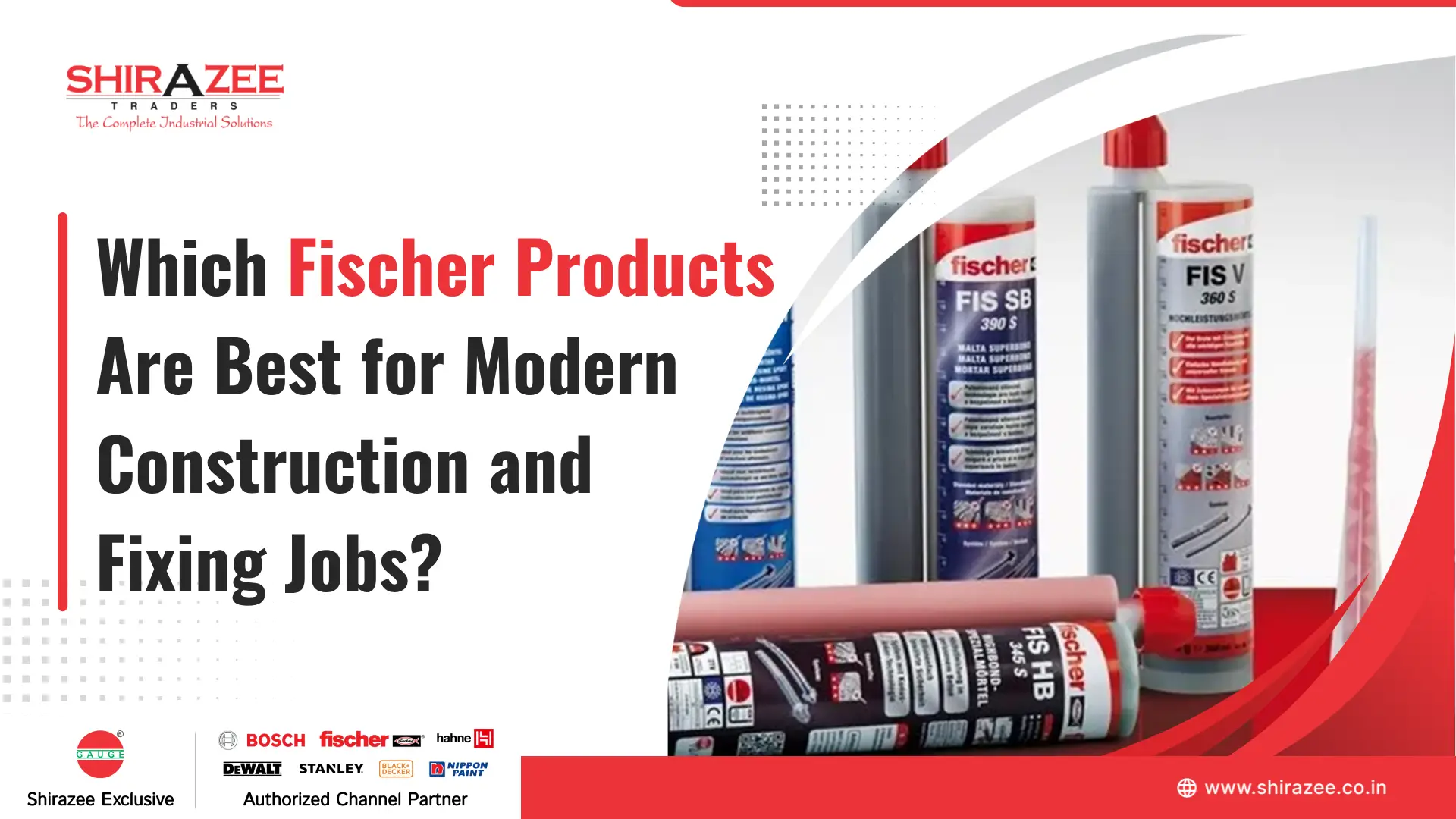
Choosing Between Fischer Injection Mortars
Different projects place different demands on chemical anchors. The right Fischer Injection Mortar should reflect those demands.
FIS V Plus for versatile applications
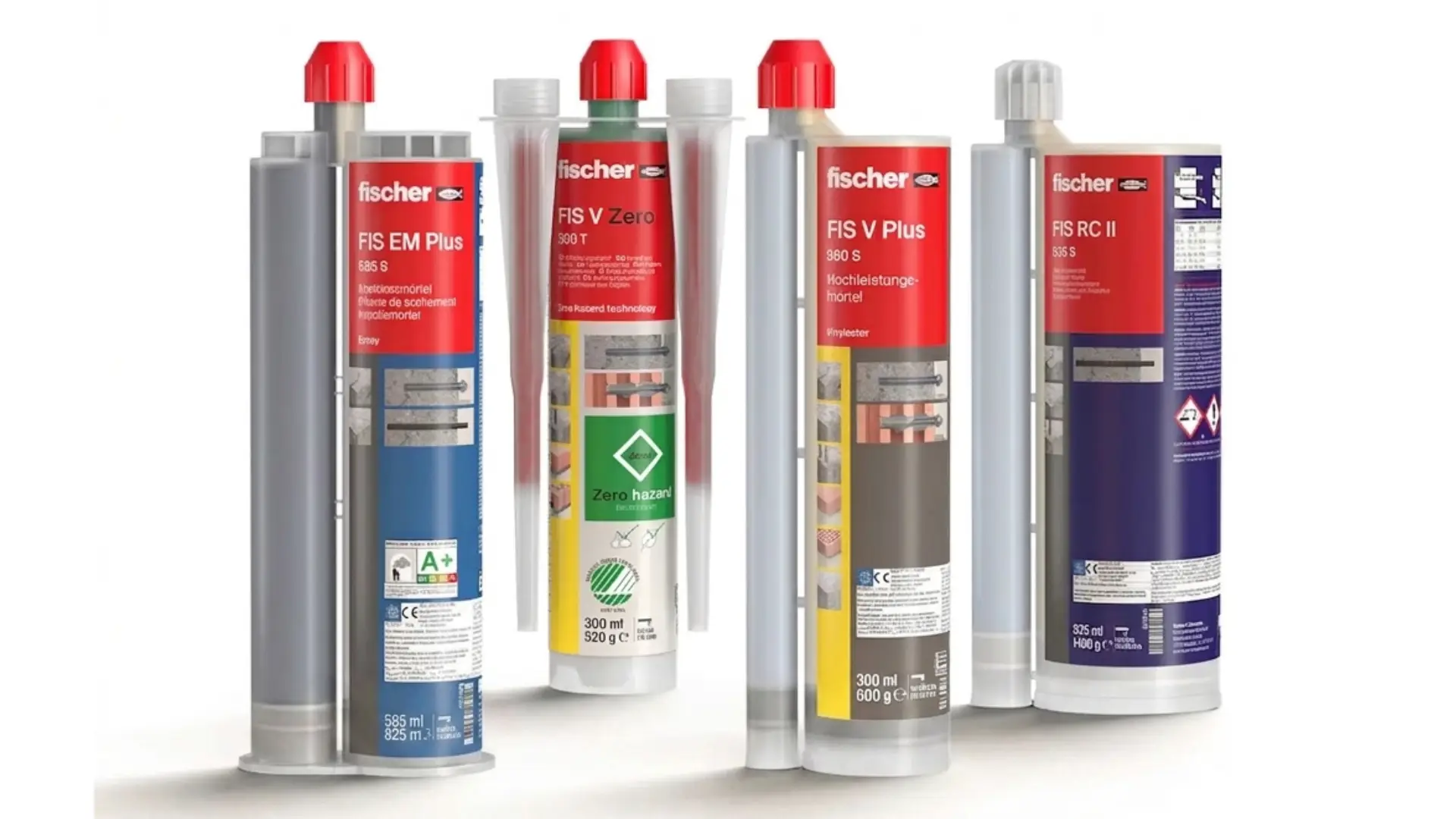
FIS V Plus is a two component injection mortar based on a vinyl ester hybrid concept. Fischer lists approvals for applications in cracked concrete, non cracked concrete, masonry, and selected specialised uses.
It can support applications such as steel structures, consoles, façades, rescue ladders, and cable trays. Fischer also reports an assessed service life of 100 years for anchorages in concrete.
The manufacturer states that the updated formulation can deliver load improvements of up to 45 % in non cracked concrete and up to 25 % in cracked concrete, compared with the earlier generation assessed by Fischer.
FIS V Plus is also approved for use in water filled drill holes under specified conditions, which can support work in demanding site environments.
FIS EM Plus for demanding concrete connections
FIS EM Plus is an epoxy mortar developed for high load anchoring and post installed reinforcement in concrete.
Fischer states that the product is suitable for cracked and non cracked concrete and carries approvals for seismic applications in performance categories C1 and C2. It is also approved for diamond drilled and water filled holes under the relevant conditions.
Its European Technical Assessment supports a service life of 100 years for post installed rebar connections and anchorages in cracked concrete.
The system also offers variable anchoring depths when used with compatible anchor rods. This can help engineers balance load requirements, installation depth, and material use.
FIS SB for high loads and demanding temperatures
FIS SB is designed for high load applications in concrete. Fischer states that the mortar supports variable anchorage depths from four to twenty times the threaded rod diameter. This provides flexibility when adapting the embedment depth to the required load.
Depending on the mortar variant, it can be processed at temperatures as low as minus 15 degrees Celsius. Fischer also lists long term service temperatures from minus 40 to plus 90 degrees Celsius, with short term exposure up to plus 150 degrees Celsius.
Applications include machines, steel structures, and temporary connections using compatible internal threaded anchors.
FIS HB for Highbond applications
FIS HB forms part of the Fischer Highbond FHB II system. It is intended for high performance fixing in cracked and non cracked concrete.
Because it operates as part of a defined system, contractors must use the specified Highbond anchor and approved installation process rather than combining it with unrelated components.
Together, these products show why High-Performance Chemicals should be selected according to the project, not simply according to availability.
Where Fischer Chemicals Support Industrial Work
The value of Fischer Construction Chemicals becomes clearer when viewed through real applications.
In commercial construction, chemical anchors can support railings, façades, staircases, canopies, steel brackets and structural connections.
Inside manufacturing facilities, they may be used for machinery, production equipment, platforms, pipework, and maintenance additions. FIS VL, for example, is listed for applications that include steel structures, machines, masts, pipelines, façades, and gratings.
Mechanical and electrical contractors may use chemical systems for cable trays, ventilation supports, suspended services, and technical equipment.
Infrastructure projects may require post installed reinforcement, barriers, noise protection systems, or heavy steel connections. Renewable energy projects may also need dependable anchoring for frames, equipment supports, and service installations.
The important question is not only where a chemical anchor can be installed. It is whether the selected system has been assessed for that material, load, and environment.
How Chemical Anchors Improve Structural Performance
Well selected Chemical Anchoring Solutions can support structural performance in several ways.
The cured mortar bonds the fixing element along the approved embedment depth. This allows forces to transfer into the surrounding material through the bonded surface.
Many chemical systems also allow variable embedment depths. Engineers can therefore design the connection within the permitted range according to the required load and available structural depth.
Chemical anchors create little or no expansion pressure compared with conventional expansion anchors. This can make them useful where anchor spacing or edge distance is limited, although the final design must still follow the relevant approval and calculation.
They are also valuable in existing structures. A contractor can add a steel frame, service support, machine, or reinforcing connection after the main structure has been completed.
Still, performance depends on more than bond strength. Steel grade, corrosion protection, temperature, moisture, curing time, concrete condition, and installation quality all influence the result.
How to Select the Right Chemical Solution
Choosing between Fischer Chemical Solutions becomes easier when the decision follows a clear process.
Begin with the base material. Is the fixing going into cracked concrete, non cracked concrete, solid brick, hollow block, aerated concrete, or another substrate?
Next, define the load. Consider tensile forces, shear forces, combined loading, vibration, seismic action and whether the fixing will be permanent or removable.
The installation environment also matters. Check whether the drill hole is dry, damp, or filled with water. Review the installation temperature, expected service temperature, outdoor exposure, and potential corrosion.
Then confirm the required fixing element. A threaded rod, internal threaded anchor, reinforcing bar or masonry sleeve must be compatible with the selected mortar.
Finally, review the current technical documentation. Product descriptions provide a useful starting point, but they do not replace engineering calculations, approvals, or installation instructions.
For safety critical and heavy duty work, professional anchor design should guide product selection.
Installation Practices That Protect Performance
Even the best Construction Chemicals cannot compensate for careless installation.
Use the specified drill diameter and hole depth. Clean the hole with the recommended brush and blow out method. Fit the correct static mixer, then discard the initial amount of mortar until the two components are mixing consistently.
Inject from the base of the hole to reduce trapped air. Insert the anchor using the required motion, then leave it untouched during curing.
Temperature deserves close attention because it can change both working time and curing time. A mortar that cures quickly in warm conditions may require much longer in colder weather.
Avoid mixing accessories from unrelated systems. Do not reuse a hardened static mixer, load the anchor early or assume that one cleaning method suits every approved installation.
For major industrial or structural work, record the product batch, hole dimensions, installation conditions, curing period, and installer details where project procedures require documentation.
Small installation steps may appear routine, but they protect the performance promised by the system.
The Future of Industrial Chemical Technologies
Future Industrial Chemical Solutions will need to balance performance, installer safety, environmental responsibility, and long service life.
Current product development already reflects this direction. Fischer highlights styrene free systems, Environmental Product Declarations, extended assessed service lives, low temperature application, and products approved for a wider range of site conditions.
Digital design tools and better project documentation will also influence selection. Engineers and contractors will increasingly expect clear data on loads, environmental exposure, installation conditions and long term performance.
The next generation of High-Performance Chemicals will not be judged only by how strongly they bond. Their value will also depend on how reliably they can be selected, installed, verified and maintained throughout the life of a structure.
Build Stronger Connections with the Right System
A chemical anchor is only as reliable as the system around it. The mortar, fixing element, drilled hole, cleaning method, curing conditions, and design load must all work together.
With a broad range of Fischer Chemical Solutions, professionals can address applications across construction, manufacturing, infrastructure, and industrial maintenance. The key is choosing the right product for the actual conditions on site.
Need help identifying a suitable Fischer mortar and compatible accessories for your application? Contact Shirazee Traders for practical product guidance and dependable access to professional Fischer fastening solutions instead of buying it from an unauthorised dealer.
Frequently Asked Questions
What industries use Fischer chemicals?
Construction companies, infrastructure contractors, manufacturing plants, mechanical service providers, energy businesses, façade installers and industrial maintenance teams use Fischer chemical fastening products.
What are the benefits of Fischer chemical anchors?
Depending on the selected system, the benefits may include high load capacity, variable embedment depth, low expansion pressure, compatibility with different base materials, and suitability for post installed connections.
Are Fischer chemical products suitable for heavy duty applications?
Yes, selected products such as FIS EM Plus, FIS SB, and FIS HB are designed for demanding applications. However, suitability must be confirmed through the relevant approval, anchor calculation, base material, load, and installation conditions.
How do Fischer chemical solutions improve construction performance?
They form a bonded connection between the fixing element and the surrounding base material. When designed and installed correctly this supports controlled load transfer and dependable connections in both new and existing structures.
Is every Fischer injection mortar suitable for concrete and masonry?
No. Some mortars support both concrete and masonry, while others are intended mainly for concrete, reinforcement, or specialised applications. Always check the product approval and technical data before selection.