
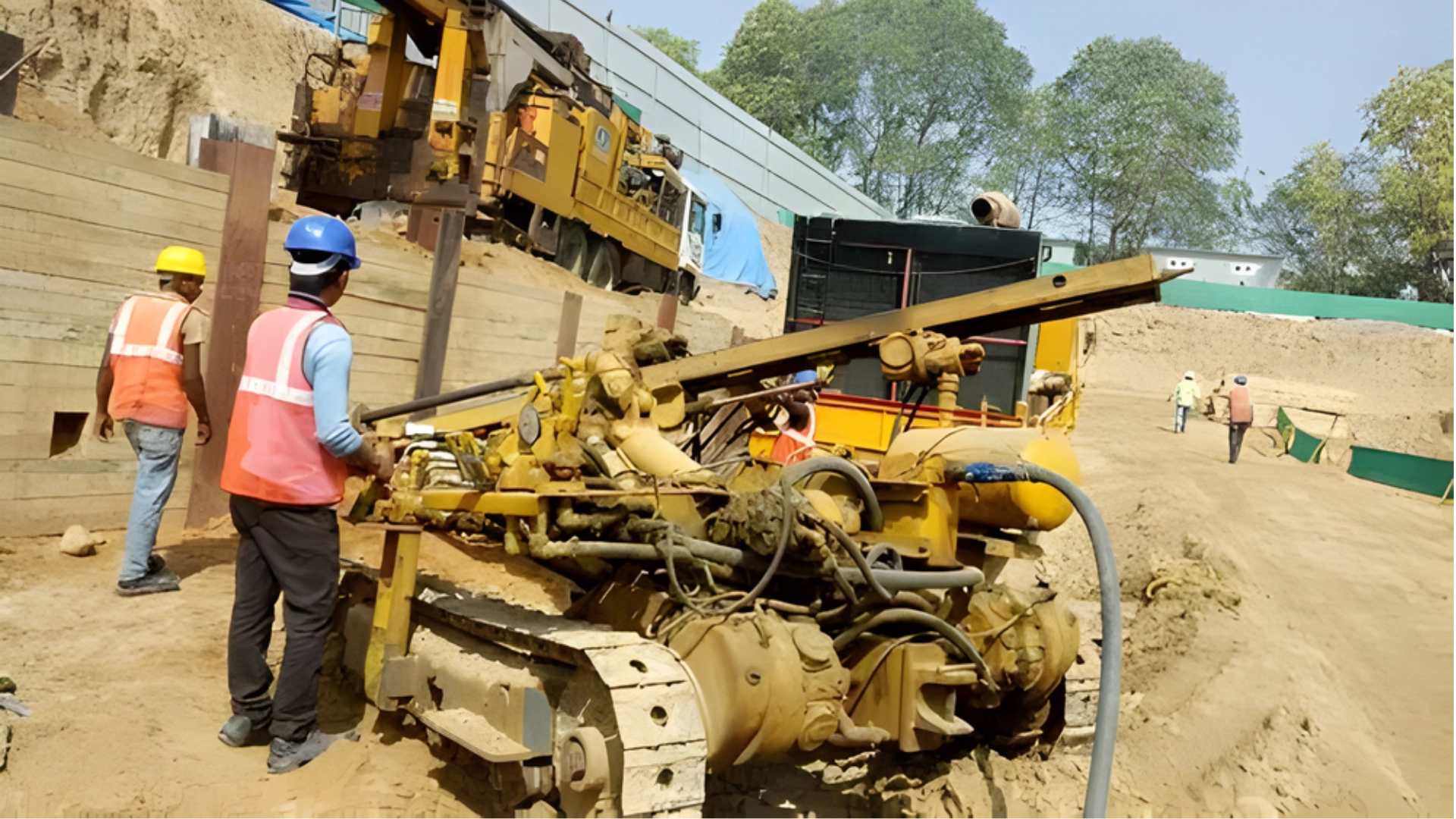
When structures begin to shift or show signs of stress, the issue often lies deep below the surface.
In high load environments, the choice of rock anchoring systems can directly impact safety, durability, and long term performance.
Yet many projects still struggle with selecting the right method for the job.
So how do you make a decision that holds under pressure and stands the test of time?
Understanding the Real Challenges in High Load Projects
Every high load project carries a level of risk that is not always visible at the surface.
A retaining wall may look stable, a tunnel may seem secure, but the real question is what is happening beneath.
Poorly selected ground anchor systems often lead to gradual structural movement, and that is very dangerous. Cracks appear, slopes weaken, and over time, the integrity of the entire structure is compromised. In large infrastructure projects, even a small miscalculation in rock anchors for construction can lead to significant delays and cost overruns.
The demand for anchoring systems for high load applications has increased rapidly. From highways and bridges to mining and deep foundation projects, engineers now deal with more complex terrains and heavier structural loads than ever before.
This raises an important question. Are traditional methods enough, or do modern projects demand more precise geotechnical anchoring systems?
Why Choosing the Right Anchoring System Is Critical Today
Construction today is not what it was a decade ago. Projects are larger, timelines are tighter, and safety standards are stricter.
The shift toward advanced foundation engineering solutions has made anchoring systems a critical part of structural design rather than just a supporting side element of construction. Engineers are now integrating soil and rock stabilisation techniques at the planning stage itself.
The Federal Highway Administration(U.S.A.) has stated in many of its reports that properly designed ground anchors can support loads exceeding 3,000 kN, depending on soil and design conditions. That number highlights the scale of responsibility these systems carry, and at the same time, research from the U.S. Department of Transportation shows that effective anchoring can improve slope stability by 30% to 50%, which directly impacts safety in infrastructure projects.
With growing reliance on tunnels, underground spaces, and deep excavation, the use of structural anchoring systems has expanded across industries. Whether it is retaining wall anchoring systems or tunnelling and mining anchors, the need for precision has never been higher.
So the focus shifts from whether anchoring is needed to how to choose the right system.
Breaking Down the Right Rock Anchoring Approach
Selecting the right anchoring solution is not about picking a product. It is about understanding the interaction between load, material, and ground conditions.
Let’s explore how this decision comes together in real projects.
Understanding the types of rock anchoring systems for construction
Every project begins with understanding the available options.
There are several types of rock anchoring systems for construction, each engineered and designed for specific applications. Mechanical anchors provide quick installation and immediate support. Grouted anchors offer long term durability and are widely used in infrastructure. Post tensioned anchors handle heavy loads and are ideal for large structures. Resin anchors are used where fast setting and strong bonding are required.
Why does this matter?
Choosing the wrong type can either underperform or increase costs unnecessarily. A system designed for temporary support cannot replace one meant for long term load bearing.
In practice, large scale infrastructure projects often rely on grouted or post tensioned anchors because they provide stability over time.
Rock bolt vs ground anchor difference
One of the most common points of confusion is the rock bolt vs ground anchor difference.
At a glance, both may appear similar. However, their purpose and performance vary significantly.
Rock bolt systems are generally used for immediate stabilisation. They reinforce the surrounding rock mass and are commonly used in tunnels and mining applications.
On the other hand, ground anchor systems are designed for long term load transfer. They are often used in retaining walls and deep foundation projects where sustained support is required.
The distinction becomes critical when selecting a system. Using a rock bolt where a ground anchor is needed can compromise the structure over time.
Matching anchoring systems to load requirements
Not all loads are equal, and neither are anchoring solutions.
When dealing with high load rock anchoring systems for infrastructure, the focus should always be on performance under stress. This includes evaluating tensile strength, safety factors, and long term durability.
Studies from the Federal Highway Administration indicate that properly protected anchors can last over 75 years, especially when corrosion protection systems are used.
This highlights the importance of selecting reliable load bearing anchor systems that match both current and future load conditions.
For example, bridge structures and heavy retaining systems often require post tensioned anchors because they can handle continuous stress without failure.
Selecting based on site conditions and soil behaviour
Even the strongest anchor will fail if it is not suited to the ground it is installed in.
Understanding soil and rock conditions is a key part of selecting the right geotechnical anchoring systems. Hard rock, fractured rock, and loose soil all behave differently under load.
This is where proper site investigation becomes essential. Engineers apply proven civil engineering anchoring methods to analyse ground conditions and select the appropriate system.
For instance, rock anchoring methods for slope stabilisation differ from those used in tunnels or foundations. Loose soil may require deeper anchoring and additional reinforcement, while solid rock may allow for more direct installation.
In mining or underground projects, specialised tunnelling and mining anchors are used to ensure safety in dynamic environments.
So the question becomes, are you choosing based on assumptions or actual ground data?
Best Practices That Improve Anchoring Performance
Even the best system can fail if not implemented correctly. Execution plays a crucial role in the success of any anchoring solution.
Here are some practical tips that can improve performance and reliability
- Always conduct load testing before final installation to validate design assumptions.
- Consider environmental factors such as moisture and corrosion, especially in long term applications.
- Use certified retaining wall anchoring systems for lateral load conditions.
- Ensure proper installation depth and alignment for maximum efficiency.
- Avoid mixing incompatible materials within the same system.
- Schedule regular inspections to maintain the performance of structural anchoring systems.
Each of these steps may seem small on its own, but together they determine the success of the entire system.
Conclusion and Next Steps
Choosing the right rock anchoring systems is not just about meeting project requirements. It is about building confidence in the structure you are creating.
When you align your anchoring solution with load conditions, ground behaviour, and long term performance goals, the outcome becomes predictable and reliable.
If you are working on a project that involves heavy loads or complex ground conditions, it may be the right time to take a closer look at your anchoring approach. The right decision today can prevent costly challenges tomorrow.
Explore the options available, evaluate your requirements carefully, and take the next step toward a more stable and secure foundation.
FAQs
How to choose rock anchors for geotechnical projects?
You should consider load requirements, soil conditions, environmental factors, and project lifespan before selecting the anchor type.
What is the difference between rock bolts and ground anchors?
Rock bolts provide immediate reinforcement, while ground anchors are designed for long term load bearing applications.
Which is the best rock anchoring system for heavy loads?
Post tensioned or grouted anchors are generally preferred for high load applications due to their strength and durability.
Where are anchoring systems commonly used?
They are widely used in infrastructure projects, mining operations, tunnelling, and retaining wall construction.