
Rakesh had promised Rohan that the anchor holes for the staircase railing would be ready before lunch. At three in the afternoon, he was still leaning his full weight into an ordinary drill, pressed against an RCC beam on the fourth floor of a residential site in Pune. The motor whined, the bit tip turned blue and the hole had barely gone past a few millimetres. Nobody on that crew lacked skill or effort. The real trouble sat somewhere else and it explains why so many contractors now look closely at Bosch professional tools before the next job begins.
One Drill, Three Jobs and a Very Long Afternoon
Rakesh’s crew owned one drill and that drill had three jobs that week. It had to bore anchor holes into concrete columns, fix conduit clips along brick walls and somehow help with a flat door shutter that refused to close after the monsoon.
By Friday the scorecard looked grim. A carbon brush had burnt out, two masonry bits had lost their edges. The brick walls carried chipped patches around every clip, and the door still stuck. Rohan who had a client walkthrough the next morning, did the maths on the lost hours and did not like the number, this could lead to the loss of a client.
What went wrong? The crew treated concrete, brick and timber as if they asked for the same kind of force. They do not, concrete needs heavy, deliberate blows. Brick needs lighter, faster ones. Timber needs no blows at all, just a clean, controlled cut. Once you see the job this way, choosing drilling tools for construction stops being a guess and starts being a decision.
Why the Blue Bosch Range Has Earned Its Place on Site
Bosch sells two broad families of power tools. The green range targets home users and occasional jobs. The blue range, the one we mean by Bosch professional tools, is built for trades that run machines every working day, often in dust, heat and long shifts. That difference shows up in motors, gearboxes, accessories and service support.
There is also a clear shift in how site teams buy. A few years ago one general drill per crew was normal. Today tighter schedules and stricter fixing requirements push contractors toward task matched machines, a structural anchor that sits in a poorly drilled hole costs more than time, it raises a safety question. This makes you lose your time and client.
Dust is part of that picture too, drilling concrete releases fine crystalline silica that workers can breathe in. The US regulator OSHA, often used as an international benchmark, caps respirable crystalline silica in construction at 50 µg/m³ averaged over an 8 hour shift with an action level of 25 µg/m³. The right tool matched with proper dust control finishes the hole faster and keeps people out of that cloud for less time.
So knowing the range is half the job. The other half is putting each machine where it belongs.
Matching Each Bosch Machine to the Material in Front of You
Rohan’s fix for the Friday mess was simple. He stopped asking which drill was “best” and started asking what each wall, column and door actually needed. Three machines answered that question.
What Gives the Bosch GBH 220 Its Hitting Power
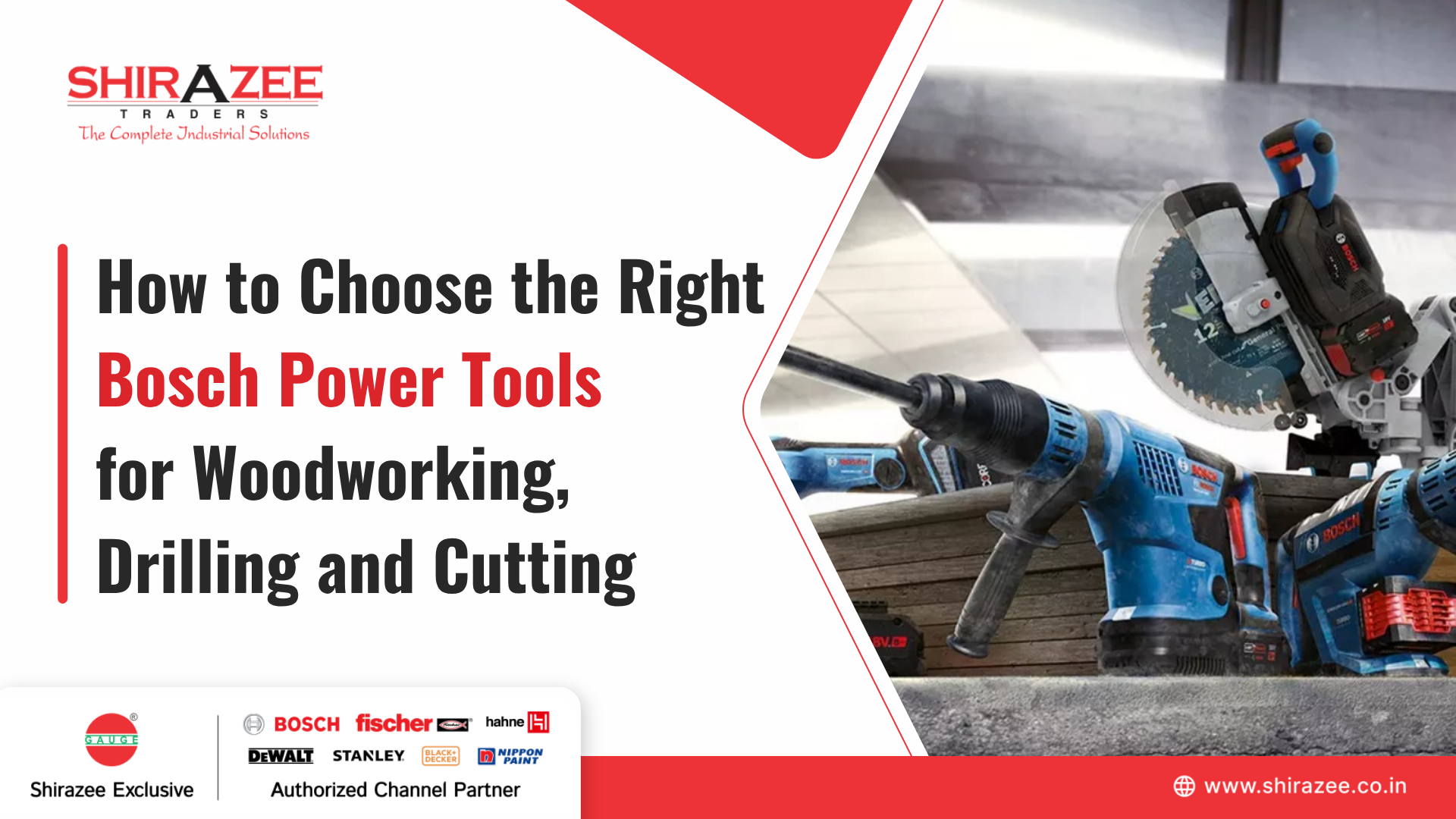
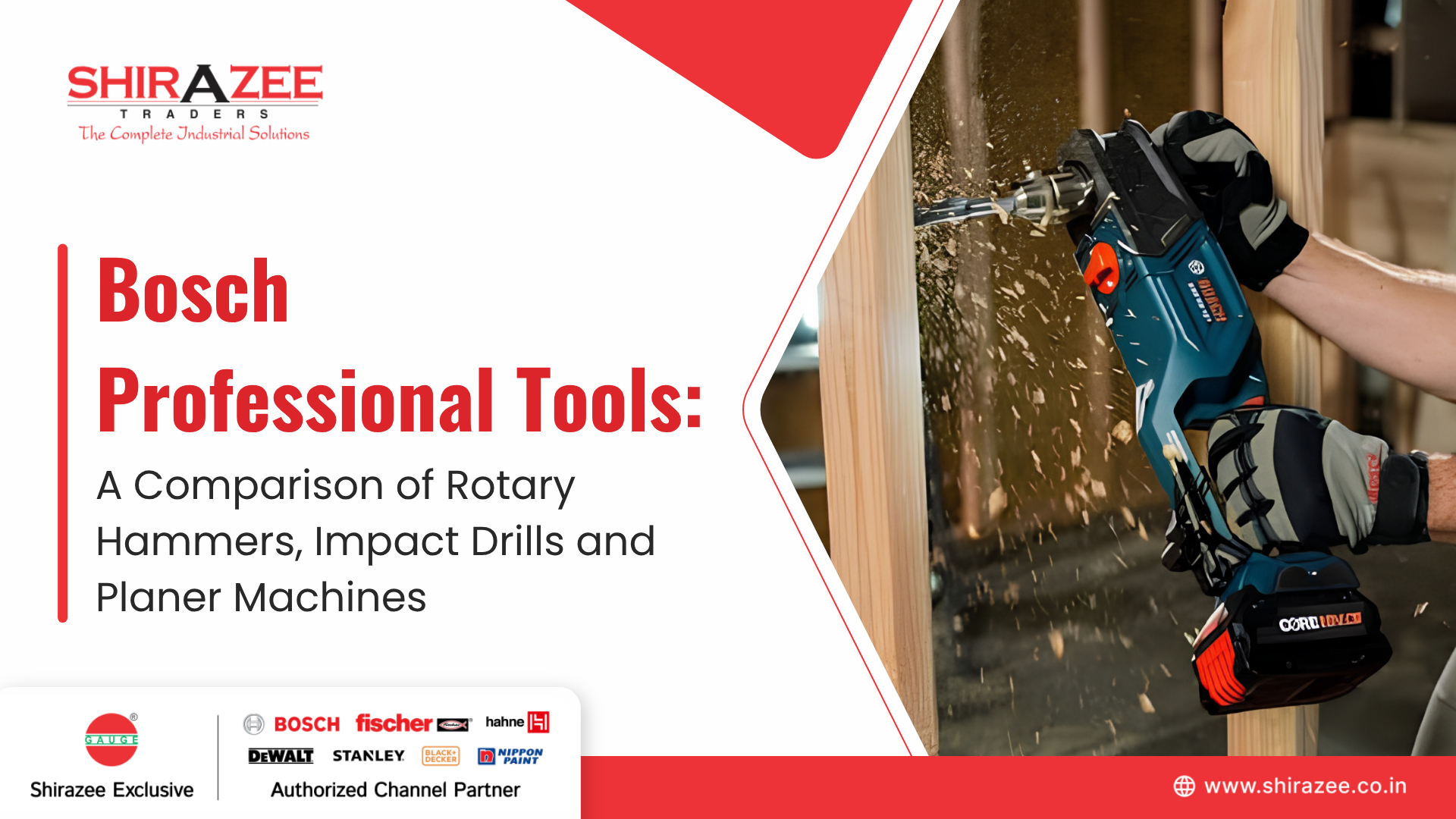
The Bosch GBH 220 is a compact SDS plus Bosch rotary hammer drill machine. Bosch rates it at 720 W with 2.0 J of impact energy and it drills concrete holes up to 22 mm in diameter. It also works in three modes, hammer drilling, plain drilling and chiselling.
Those numbers matter because of how a rotary hammer works. Inside, a piston drives a striker that lands measured blows on the back of the bit, up to 4,800 blows per minute at rated speed. The bit chips through concrete instead of rubbing against it. That is why the operator can ease off and let the tool do the work.
In practice, you pick the bit diameter to suit the anchor, set the depth stop and hold the machine steady without leaning into it. Chisel mode handles small hacking jobs, such as opening a chase for a pipe.
Back on site, Rakesh used the GBH 220 for 12 mm holes meant for chemical anchors in an RCC column. Each hole took a fraction of the earlier time came out cleaner, and left his wrists in far better shape. That single job covers most everyday hammer drill applications, anchoring, fixing brackets to slabs and columns, and light breaking.
Where the Bosch GSB 450 Shines and Where It Stops
So does every hole need a rotary hammer? Not at all, the Bosch GSB 450 is a light impact drill with a 450 W rated input a keyed chuck that holds bits from 1.5 to 10 mm and a weight of about 1.5 kg. Bosch designed it to stay compact for tight corners and overhead work.
The key difference lies in the mechanism, an impact drill uses two ribbed discs that ride over each other as the chuck turns, which produces many small, light blows. A rotary hammer delivers fewer blows, but each one carries far more energy. Brick and block respond well to the impact drill’s quick tapping. Dense RCC and larger anchor holes need the rotary hammer’s heavier punch.
Use the hammer setting for brick and block, switch it off for wood and metal, and keep the tool away from structural anchoring in concrete. Rohan’s electrician learned this the easy way. With the GSB 450, he fixed switchboards, conduit clips and curtain brackets across a full floor of brick walls in one morning, including a stretch of ceiling work, without the fatigue a heavier machine would have caused.
How a Bosch Planer Machine Saves the Finishing Stage
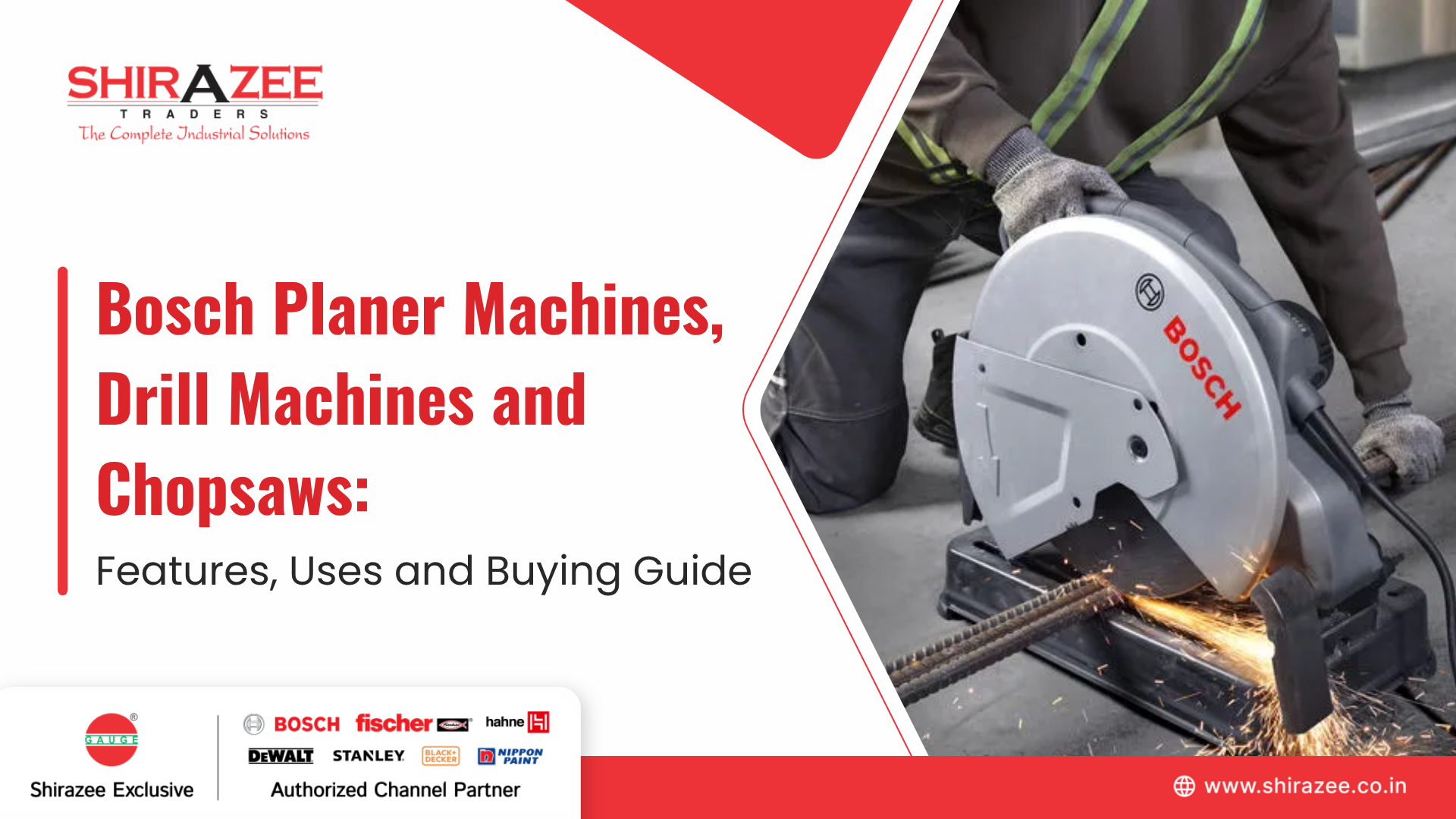
Then there was the door. Timber needs a cut, not a blow and that is where a Bosch planer machine earns its spot. A handheld model such as the GHO 6500 runs a 650 W motor across an 82 mm planing width, it takes off up to 2.6 mm in a pass and can cut rebates up to 9 mm deep.
Swollen shutters, uneven frames and rough edges tend to show up right before handover and fixing them on site saves a trip back to the carpenter’s workshop. The method is straightforward. Take several shallow passes instead of one deep one, keep the blades sharp, and use the parallel guide for straight edges.
Rakesh’s crew shaved the sticking shutter in about ten minutes. Among woodworking power tools, few save as much rework at the finishing stage.
A Job by Job Guide to the Right Machine
| Bosch GBH 220 rotary hammer | Concrete, RCC, stone | Anchor holes, slab and column fixings, light chiselling | Fine work in timber, tiles in hammer mode |
| Bosch GSB 450 impact drill | Brick, block, wood, metal | Electrical and plumbing fixings, brackets, overhead drilling | Dense RCC and large structural anchors |
| Bosch GHO 6500 planer | Timber | Levelling shutters, chamfering, rebating frames | Anything other than wood |
Looking at Rakesh’s site through this table, the logic is plain. Concrete went to the hammer, brick went to the impact drill and the door went to the planer. Nobody had to force anything.
Seven Checks Before You Buy and the Mistakes That Cost the Most
A good purchase starts with your own site, not with a catalogue. Before a procurement head signs off on any of these machines, these seven checks deserve a few minutes each.
- The material you drill most, if RCC dominates your work, start with a rotary hammer. If brick, block and fixtures fill most days, an impact drill may cover you.
- Your largest hole and anchor size, match the tool’s rated capacity to the biggest anchor in your drawings, not the average one.
- Daily running hours, a machine that runs six hours a day needs more headroom than one used twice a week.
- Weight and working position, ceiling and overhead work punish heavy tools. A lighter machine keeps accuracy up late in the shift.
- Chuck system and accessory cost, SDS plus bits lock and release quickly, while keyed chucks accept a wider mix of standard bits. Factor in what you will buy over a year.
- Dust and noise protection, plan for extraction or masks and ear protection too. The GBH 220, for instance, carries a rated sound pressure level of 93.5 dB(A).
- Genuine stock and service access, buy from an authorised source so warranty claims and spare parts stay simple.
The costliest mistakes tend to repeat across sites, this adds up the cost overall. The first is using an impact drill for structural anchors in concrete, which leads to oversized or shallow holes that weaken the fixing. The second is leaving hammer mode on while drilling ceramic tiles, which cracks them almost every time, the third is forcing one deep pass with a planer instead of several light ones, which tears the grain and strains the motor, each one is easy to avoid once the crew knows why it happens.
Choosing Your Bosch Tool the Way Rakesh Learned To
Rakesh’s crew finished the next week without a single burnt motor. The concrete went to the rotary hammer, the brick walls went to the impact drill and the timber went to the planer. Rohan’s walkthrough went smoothly, and the client never heard about the Friday that nearly went wrong.
The lesson travels well to any site. Start with the material, then the hole size, then how often and where the tool will run. The cheapest machine is rarely the one with the lowest price tag, it is the one that suits the job the first time.
If you are planning a project and want a second opinion on which machine fits your materials and workload talk it through with us before you buy. A short conversation about your drawings now can save a long afternoon on site later.
Questions Contractors Often Ask
What applications are suitable for the Bosch GSB 450?
The Bosch GSB 450 works best on brick, block, wood and metal. Electricians and plumbers rely on it for switchboards, conduit clips, pipe clamps and curtain brackets, where holes are small and plentiful. At about 1.5 kg with a keyed chuck that holds bits from 1.5 to 10 mm, it stays comfortable through long stretches of ceiling and tight corner work. For dense RCC or large structural anchors, though, a rotary hammer remains the safer choice.
What is the difference between an impact drill and a rotary hammer?
The difference comes down to how each tool delivers its blows. An impact drill uses two ribbed discs that ride over each other as the chuck turns, producing many light, fast taps that suit brick and block. A rotary hammer uses a piston to drive a striker, which delivers fewer blows with far more energy behind each one. That heavier punch is why rotary hammers handle concrete and most structural hammer drill applications, while impact drills remain the lighter, handier option among drilling tools for construction and everyday fixing work.
Which Bosch tools are suitable for woodworking?
A Bosch planer such as the GHO 6500 is the go to choice for shaping timber on site. It levels swollen door shutters, chamfers sharp edges and cuts rebates up to 9 mm deep in frames. For drilling holes in wood, the GSB 450 does the job well with its hammer function switched off. Together, these two woodworking power tools cover most of the finishing and carpentry fixes that crop up close to handover.