
Rakesh, a site contractor in Pune, started a Monday office fit out with one trusty drill. Within an hour, it had bored into a concrete ceiling, fixed plywood panels and gone through a steel bracket. By lunch, the chuck wobbled and the schedule had slipped. Bosch power tools are built for hard work, but even a good machine struggles in the wrong job, and one small detail in how a drill strikes explains most of Rakesh’s morning.
When One Tool Tries to Do Every Job
The trouble started at the RCC beam. Rakesh needed twelve anchor holes for the ceiling grid, so he pushed his light impact drill harder and harder. The bit turned blue at the tip, the motor gave off that warm, burnt smell every installer knows, and each hole crept deeper a few millimetres at a time.
Rohan, the project manager, saw a different picture. He saw two carpenters waiting for the grid, a replacement bit on the next purchase order and a handover date that suddenly looked shaky. Nobody had been careless and the drill was not faulty. It had simply been asked to do a rotary hammer’s job. That mismatch is one of the most common and costly mistakes with power tools for construction.
Why Picking the Right Tool Matters More on Today’s Sites
A decade ago, buying a tool meant picking a wattage and a price, today the shelf is far more crowded. Bosch’s power tools division employed about 17,300 people and generated roughly 5 billion euros in sales in 2025, and it plans to launch around 2,000 new products by 2027. More choice helps but only when you know what you need.
The same holds closer to home. Bosch Power Tools India reaches more than 600 districts and runs a plant in Chennai, so Bosch professional tools now sit on counters well beyond the metro cities. That puts genuine tools within reach of smaller contractors, along with plenty of models that look alike at first glance.
There is a health side as well. Drilling and cutting concrete throws up fine silica dust, and heavy tools pass vibration into the hands and arms. The right tool finishes faster and treats your crew better. That is why more contractors now buy into a system of shared batteries, dust extraction and matching accessories instead of single machines.
Matching Bosch Professional Tools to the Work in Front of You
After that Monday, Rohan sat down with Rakesh and rebuilt the kit around tasks rather than the catalogue, their logic works on almost any site.
Shaping Timber with Bosch Planer Machines and Woodworking Equipment
The fit out had door frames, shutters and panelling, so timber came first. A planer shaves wood evenly, layer by layer, until a surface sits level or a shutter fits its frame. Bosch planer machines in the GHO range do this right on site. That saves a trip to the workshop when a door swells in the monsoon and starts catching on the floor.
The planer rarely works alone, a jigsaw handles curves and cut outs, a circular saw gives straight rips through board while a router shapes edges and an orbital sander finishes the surface before polish, a team works together to complete the project in the given deadline. When comparing woodworking equipment, check planing width, depth adjustment, enough power for hardwoods and a proper dust port, fine wood dust in a closed office becomes everyone’s problem by afternoon.
Finding the Right Bosch Drill Machine for Each Surface
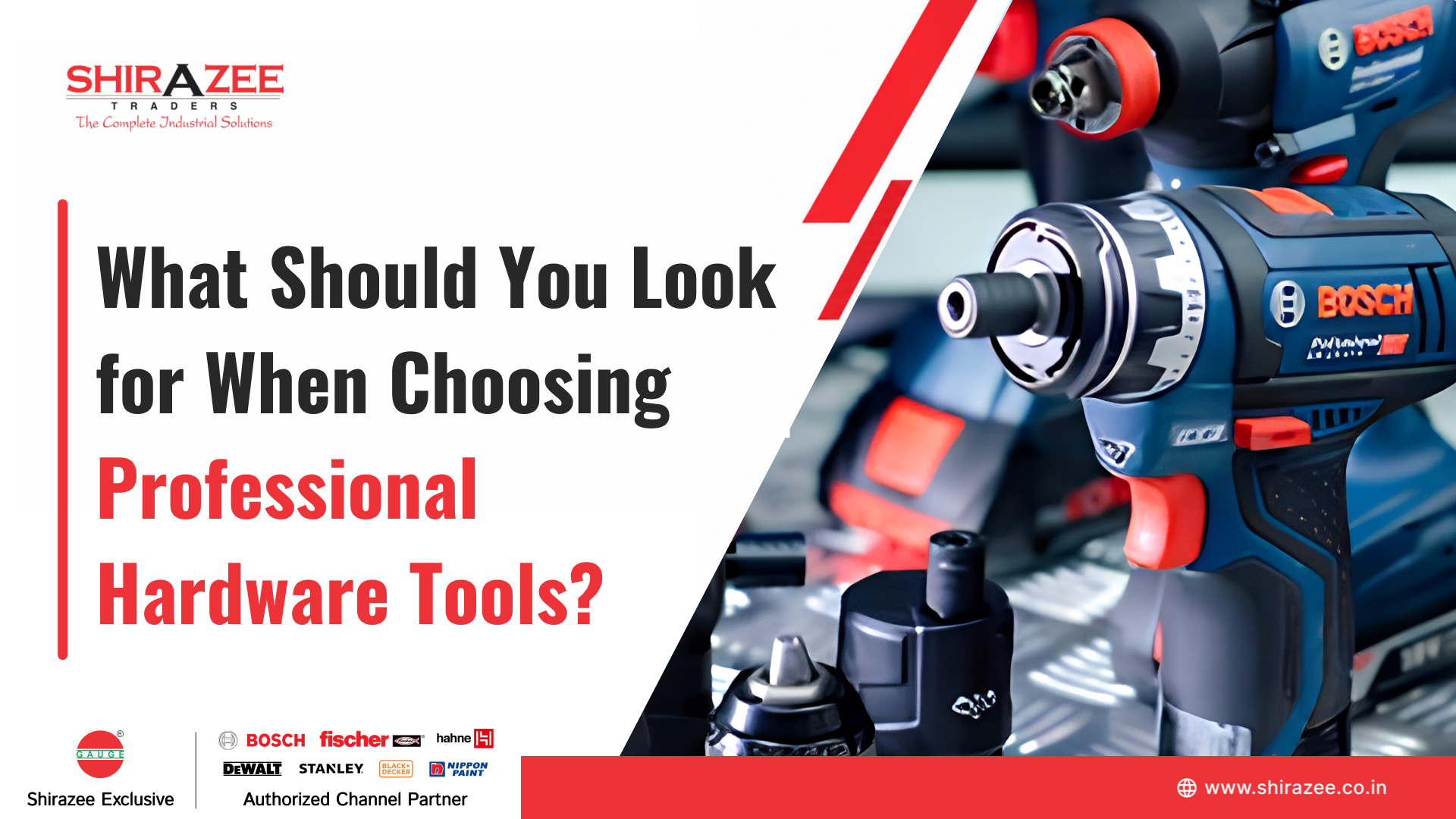
Drilling caused the Monday mess, so it deserved the most thought. Bosch drill machines fall into three families,
- Drill drivers in the GSR range handle wood, metal and screws, with a clutch that stops screws from stripping.
- Impact drills in the GSB range add a light hammering action for brick and block.
- Rotary hammers in the GBH range are built for concrete, anchoring and chiselling.
On Rakesh’s job, the gypsum channels needed a drill driver, the brick partition needed an impact drill and the RCC beam needed a rotary hammer. Beyond the family, look at the chuck type, variable speed, weight for overhead work and whether corded or cordless suits your site’s power supply. Good drilling equipment should feel balanced at shoulder height, not just on the shop counter.
Choosing Bosch Cutting Tools by Material and Finish
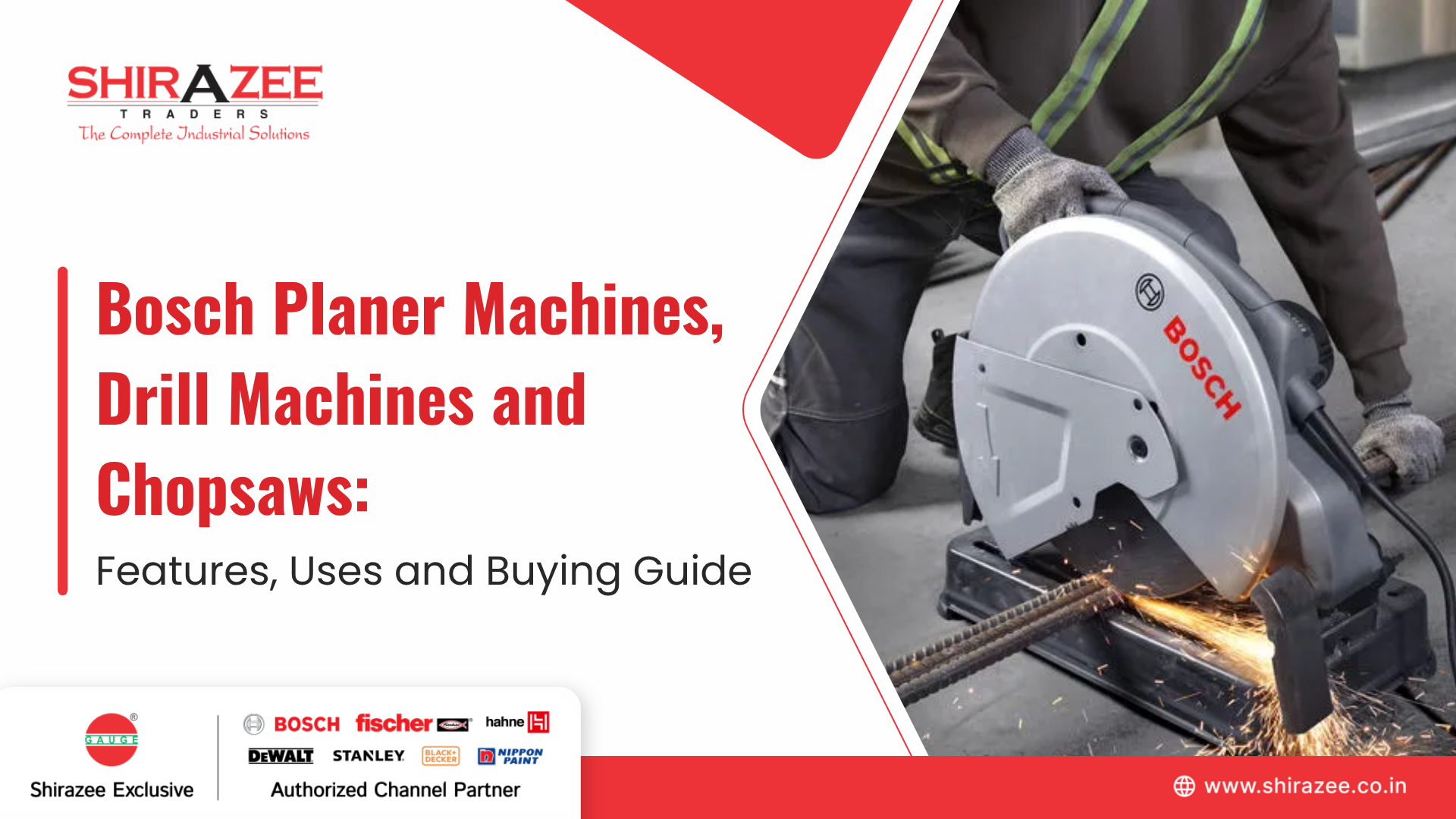
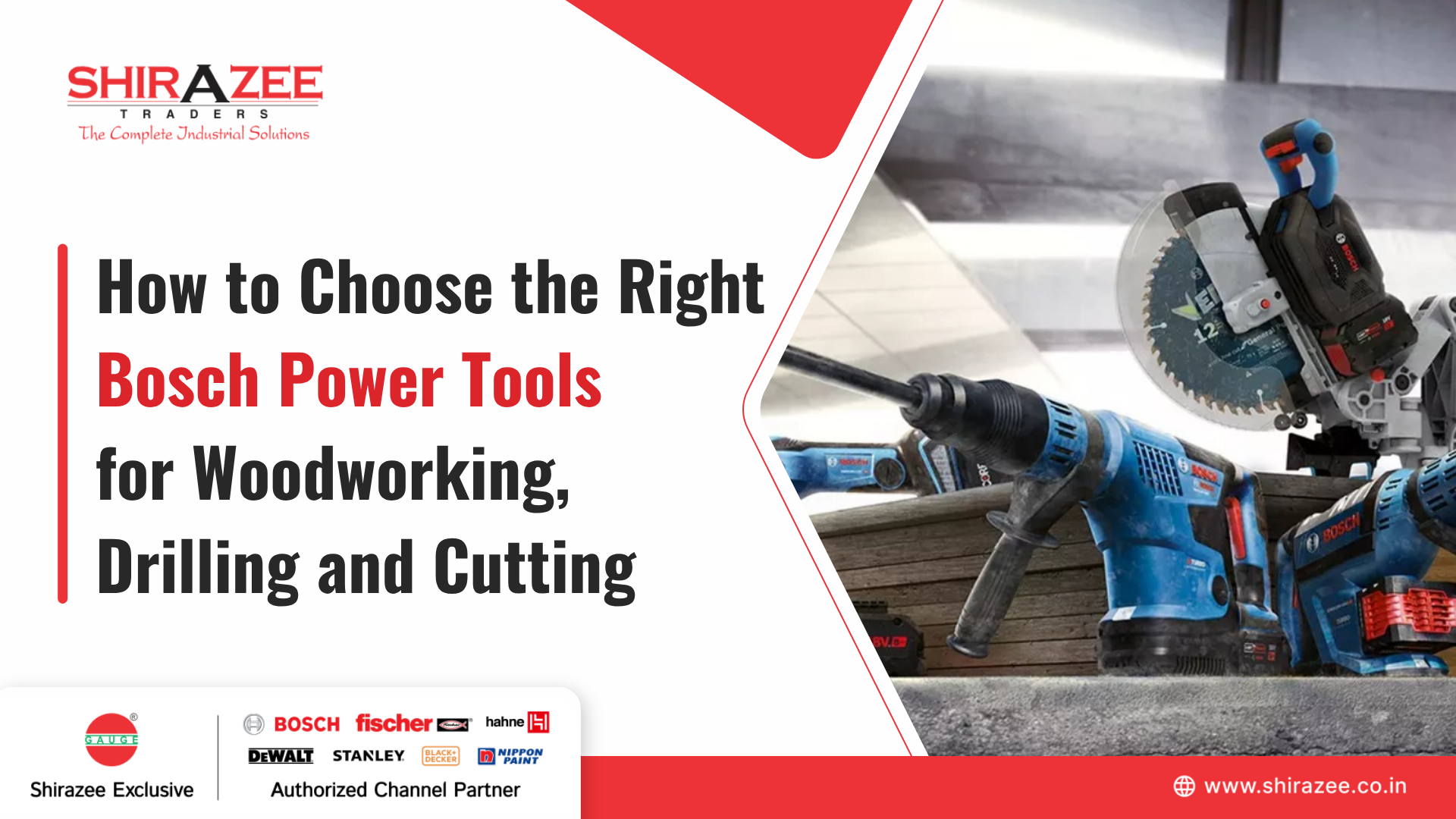
Bosch cutting tools include angle grinders for metal and masonry, circular and mitre saws for timber, tile and marble cutters for stone and reciprocating saws for rough demolition cuts, the disc or blade often matters as much as the motor.
Rakesh’s crew learned this on the vitrified flooring. A general grinder kept chipping tile edges and every chipped tile was one the client had already paid for. A dedicated cutter with the right blade fixed the problem in a day. Before you buy, check the disc size, guard design, soft start, kickback protection and support for wet cutting or dust extraction on stone and concrete.
Rotary Hammer or Impact Drill and Why the Blow Makes the Difference
So what actually went wrong at the beam? An impact drill creates its hammering action with two ribbed discs that click against each other. You get thousands of light taps per minute, which suits brick but barely dents dense concrete.
A rotary hammer uses an electro pneumatic mechanism, where a piston compresses a cushion of air that drives a striker into the bit. It lands fewer blows, but each one carries far more energy which manufacturers list in joules.
On hard concrete, the weight of each blow matters more than the count. That is why holes that ate up Rakesh’s morning take minutes with the right machine. The idea has a long history, too. Bosch’s first hammer drill reached the market in 1932, and in 1984 the company released the first professional cordless hammer drill, the GBH 24 V.
One clarification saves a lot of confusion at the counter. Many buyers in India call a percussion drill an impact drill and then mix it up with an impact driver, which is a fastening tool. For regular concrete drilling, anchor fixing or chiselling, choose a rotary hammer with an SDS-plus or SDS-max chuck. Keep the impact drill for brick, block and light jobs.
Five Checks Before You Buy Professional Power Tools
With a shortlist ready Rohan ran every tool past five checks before signing the order.
- Workload, a tool that drills concrete all day needs a different build from one used twice a month.
- Power source, corded tools suit long fixed jobs. A cordless platform pays off when one battery moves between drill, grinder and saw.
- Vibration and grip, as a benchmark, the UK Health and Safety Executive sets a daily exposure action value of 2.5 m/s² A(8) and a limit value of 5 m/s² A(8). Lower vibration lets a worker stay further below those lines.
- Dust control, in the US, OSHA requires employers to protect construction workers from silica exposure above 50 μg/m³ averaged over an 8 hour day. Extraction attachments and wet cutting keep dust down on any site.
- Genuine product and service, check the warranty, the authorised service network and the seller’s record. A fake tool costs far more than its price the first time it fails.
Keeping Your Tools Sharp, Cool and Ready for the Next Job
Buying right is half the job. The other half happens at the end of every shift.
- Blow out the vents, concrete dust packs into motor housings and makes them run hot.
- Grease the SDS shank, a dry shank wears out both the bit and the chuck faster.
- Check brushes and cables, worn carbon brushes cause sparking and power loss, and a nicked cable is a shock risk on a wet site.
- Store batteries sensibly, keep them out of direct sun and hot vehicle cabins.
- Match the accessory to the material, forcing a wood bit into masonry or leaning on a blunt disc wears out the tool and the user.
- Rotate heavy work, sharing long rotary hammer sessions across the crew keeps each person’s vibration exposure lower.
Well kept Bosch power tools last longer. They also stay accurate, which matters when an anchor position leaves no room for error.
Build a Toolkit That Works as Hard as Your Crew
Rakesh’s next fit out finished on time, and not because anyone worked harder. The planer handled the shutters, the rotary hammer handled the beam, the tile cutter handled the flooring, and nobody forced a tool past its purpose. Take a look around your own site this week. Which tool is doing a job that belongs to another machine? The cheapest tool on the invoice often becomes the most expensive one on site. If you’re planning your next project, talk to our team, and we will gladly help you match genuine Bosch tools to your materials and workload.
Frequently Asked Questions
How do I choose the right Bosch drill machine?
Start with the surface you drill most often. A drill driver suits wood, metal and screw fixing, an impact drill suits brick and block, and a rotary hammer is the right choice for concrete, anchoring and chiselling. After that check the chuck type, variable speed, weight for overhead work and whether a corded or cordless machine fits your site's power supply. A drill that matches the surface finishes faster, wears less and puts less strain on the person holding it.
What is the difference between a planer machine and a cutting tool?
A planer shaves thin layers off the surface of timber to level it, reduce its thickness or make it fit a frame. A cutting tool, such as a circular saw, jigsaw or angle grinder, separates material along a line. In simple terms, you cut a piece to size and then plane it to fit. On most interior jobs, the two work together, so one rarely replaces the other.
What should I consider before purchasing professional power tools?
Look first at your daily workload because a tool used all day needs a sturdier build than one used now and then. Then decide on the power source, keeping in mind that a shared cordless battery platform saves money as your kit grows. Check vibration levels, grip and dust control, since these affect your crew's health over months of use, finally buy genuine products with a valid warranty and access to an authorised service centre, so a breakdown costs you a day rather than a project.