

The call came late on a Friday. Rakesh, who runs a fabrication unit near Chakan, learned that his client had rejected a batch of shafts for the second time in a month. His operator knew the job and the machine had not broken down once. The real problem was the grinding machine itself and it traces back to four questions most buyers never ask.
The Shaft That Came Back Twice
Rohan, the project manager who handled the client account, drove down to the unit on Monday morning with the inspection report in hand. It listed a slight taper along the length of each shaft; chatter marks on the bearing seats and a surface finish rougher than the drawing allowed.
Nobody on the shop floor had been careless. Rakesh had bought the machine a year earlier because the price was right and the dealer said it could grind anything, so he trusted it and then each rejected batch now meant another week of rework, another awkward phone call and a client quietly wondering whether the next order should go elsewhere, in the end, a client earned from hard lost because of a grinder which was supposed to grind everything.
So What Does a Grinding Machine Really Do? What Does a Grinding Machine Really Do?
A grinding machine removes small amounts of material from a workpiece using a rotating abrasive wheel. The aim is to bring the part to a precise size, shape, and surface finish. Most parts reach the grinder after turning or milling has done the heavy cutting. That makes grinding the last step before inspection, so any mismatch between machine and job shows up right there, on the drawing and on the rejection slip.
Tighter Tolerances, Stricter Dust Rules, Higher Stakes
Rakesh’s situation is more common than most workshops admit, and the stakes keep rising. The Indian Machine Tool Manufacturers’ Association reported that India’s machine tool consumption reached USD 3.7 billion in FY 2024-25. More demand brings more models, more dealers, and more catalogues. Picking the right industrial grinding machine from all of that is harder than it looks.
Safety expectations have moved too. In February 2025 ISO approved ISO 16089:2025, the international safety standard for stationary grinding machines. It covers everything from manually controlled machines to fully numerically controlled ones.
On construction sites, dust is the bigger concern. Under the US OSHA rule, respirable crystalline silica exposure is limited to 50 micrograms per cubic meter of air, averaged over an 8-hour shift. Employers must use controls such as water or ventilation before relying on respirators. Grinding concrete and stone falls squarely within that rule.
Buyers have noticed that many procurement teams now ask about tolerance capability and running costs before they ask about price. Good grinding machine selection has become a business decision not just a workshop one, because it affects your business if anything goes wrong, and over time this adds up to your cost.
So where should the decision start? It starts at the wheel.
How a Grinding Wheel Actually Removes Metal
Thousands of Tiny Cutting Edges
A grinding wheel can look like a smooth stone, but each abrasive grain on its surface works as a tiny cutting tool. Every grain shaves off a minute chip as the wheel spins.
How the wheel behaves depends on its recipe. ISO 525 describes bonded abrasive products by four properties:
- Grain size, which is how coarse or fine the grit is
- Grade of hardness, which is how firmly the grains are held
- Structure or porosity, which is how open the wheel is
- Bond type, which is what holds the grains together
Change any one of these and the same machine produces a different result.
Heat, Sparks and Why Coolant Matters
All that cutting creates friction and friction creates heat. When heat builds up faster than it can escape, the workpiece shows burn marks and can even change size slightly as it cools. Coolant carries that heat away. Wheel dressing removes the dull, glazed layer of grains and exposes fresh, sharp ones.
When Rohan and Rakesh looked closely, the burn marks on the rejected shafts led straight back to a glazed wheel that nobody had dressed in weeks. That fixed one problem. The taper and chatter, though, pointed to something bigger which brings us to the machines themselves.
Meet the Grinding Machine Family
There are many grinding machine types, but most workshop and site decisions come down to a handful of families.
Surface Grinders for Flat, True Faces
A surface grinding machine moves the workpiece under a rotating wheel to produce flat, parallel faces. Die plates, fixtures, gauge blocks and machine beds are its natural territory.
Cylindrical Grinders for Round Parts
A cylindrical grinding machine rotates the workpiece between centres or in a chuck while the wheel works on its outer or inner diameter. Shafts, pins and bearing seats belong here, which is exactly where Rakesh’s job should have gone.
Centerless Grinders for High Volume Round Work
A centerless grinding machine supports the part on a work rest between a grinding wheel and a regulating wheel, with no centres needed. It suits long runs of rods, bushes and pins where speed and consistency matter most.
Precision and Portable Grinders
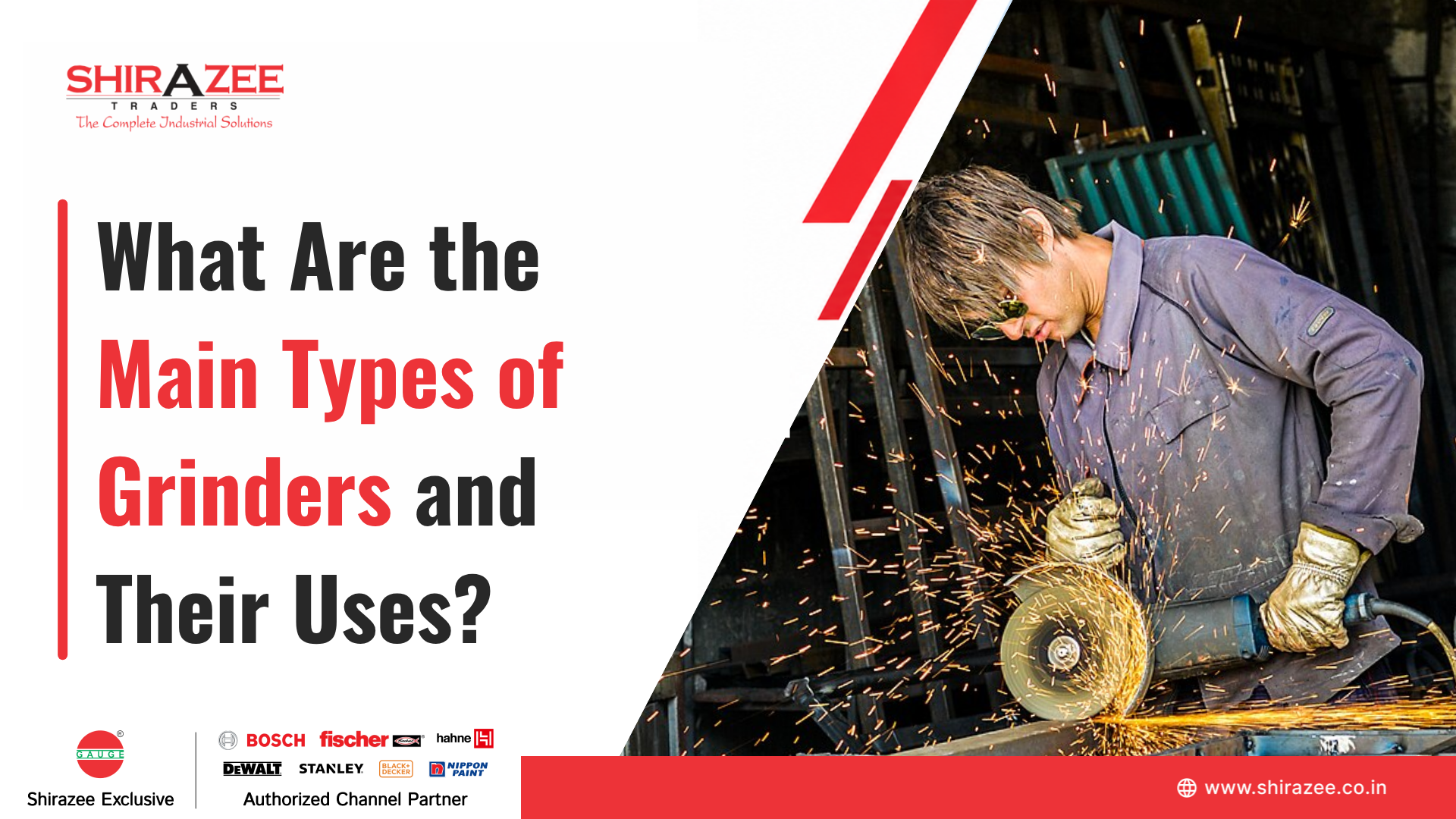
Tool and cutter grinders, along with other precision grinding machine setups, handle fine work such as sharpening and close tolerance finishing. At the other end of the scale, angle grinders take care of site jobs like weld dressing and concrete surface preparation, where moving the tool around matters more than micron level accuracy.
Knowing the families is useful, but it does not tell you which one to buy. For that, you need a method.
A Four Question Framework for Smarter Grinding Machine Selection
Start With the Job, Not the Catalogue
The first question is simple. What exactly are you grinding? Look at the part’s shape, its size, how many pieces you need, and whether the work happens in a shop or on site. These answers narrow the field faster than any brochure.
Rohan saw this clearly once he set the two jobs side by side. His site team needed portable grinders for weld dressing on structural steel. Rakesh’s shaft order needed a stable cylindrical setup in the shop. Same project, completely different machines.
Let the Workpiece Material Have Its Say
Materials decide more than people expect. Hardened steel, cast iron, stainless steel, non-ferrous metals and concrete each respond differently to an abrasive. A wheel that cuts mild steel cleanly can clog quickly on aluminum, a machine without enough rigidity will struggle on hard materials.
Before you compare machines, write down the materials you grind most often. Then ask the supplier which wheel and machine setup suit each one.
Match the Machine to the Tolerance You Promised
Your drawing is a promise to your client. If the drawing specifies tight tolerances and a fine finish, the machine needs the spindle quality, rigidity and feed control to deliver them every time, not just on a good day.
This is where Rakesh’s original purchase fell short. A general-purpose setup could get the shafts close. Only a precision grinding machine built for cylindrical work could hold them to the drawing batch after batch.
Map Each Application to Its Natural Fit
Once you know the job, the material and the tolerance, matching grinding machine applications to machines becomes much clearer.
| Flat plates and die faces | Surface grinder | Produces true, parallel surfaces |
| Shafts and bearing seats | Cylindrical grinder | Controls diameter and roundness |
| High-volume pins and rods | Centerless grinder | Fast, consistent output without centres |
| Cutting tool sharpening | Tool and cutter grinder | Handles fine angles and edges |
| Site weld and concrete work | Angle grinder | Portable and quick to set up |
Checks Worth Making Before You Sign the Purchase Order
Even with the right machine type in mind, a few practical checks protect your money and your people.
- Size spindle power and rigidity for your heaviest job. A machine that handles your average part comfortably may chatter on the toughest one.
- Match the wheel to the machine. OSHA guidance requires each wheel’s maximum RPM rating to suit the grinder’s speed. New wheels should be visually inspected and ring tested before mounting.
- Check guarding and clearances. On bench and pedestal grinders, OSHA limits the gap between the work rest and the wheel to 1/8 inch and the gap between the tongue guard and the wheel to 1/4 inch. These are widely used safety benchmarks worth asking any supplier about.
- Plan for dust and coolant. For concrete and stonework, water suppression or extraction should be part of the purchase, not an afterthought.
- Confirm spares and service. Ask how quickly you can get wheels, parts and a technician in your area.
- Avoid the classic mistakes. These include buying on price alone, oversizing “for the future”. Skipping wheel dressing and assuming operators will figure out a new machine without training.
The Right Grinder Is the One That Fits the Part
Three months later, Rakesh’s shafts passed inspection on the first attempt. He had not hired a new operator or worked longer hours. He had matched the machine to the part, the material and the tolerance, and he dressed his wheels on schedule.
The best grinding machine is rarely the most expensive or the most versatile one. It is the one built for the work you actually do. If you have a part drawing on your desk and a buying decision coming up, share the material, the tolerance and the batch size with our team. We’ll help you narrow the options before you spend.
Quick Answers for Busy Buyers
What are the main types of grinding machines?
The most common grinding machine types are surface, cylindrical, centerless, tool and cutter and portable angle grinders. Surface grinders handle flat work, cylindrical and centerless grinders handle round parts and tool and cutter grinders take care of sharpening and fine finishing. Angle grinders cover site jobs where portability matters more than close tolerances.
How do I choose a grinding machine?
Start with the job itself, meaning the shape of the part, how many pieces you need, and whether the work happens in a shop or on site. Next, look at the workpiece material and the tolerance and finish your drawing requires. Once you have those answers, compare machines on spindle power, rigidity, safety features and after sales support rather than on price alone.
What is a surface grinding machine used for?
A surface grinding machine produces flat, smooth and parallel faces on a workpiece. Tool rooms and fabrication units use it for die plates, fixtures, gauge blocks and machine beds. It is the right choice whenever flatness and an even surface across the whole face matter more than anything else.
What is a cylindrical grinding machine used for?
A cylindrical grinding machine grinds the outer and, on many models, inner diameters of round parts. Shafts, pins, rollers and bearing seats are typical jobs. It suits work where roundness and diameter must stay consistent along the full length of the part.
What factors affect grinding machine selection?
The main factors in grinding machine selection are workpiece material, required accuracy, surface finish and batch size. Spindle power and machine rigidity decide how well the grinder handles your toughest jobs. Guarding, dust control, and access to spares and service decide how safely and reliably it runs over the years.