A bucket and hose may handle light dust, but they often struggle with dried mud, road grime, wheel dirt, and narrow gaps. You spend more time scrubbing, refilling water and moving around the vehicle, yet some areas still look unfinished.
A Bosch Car Washer brings focused water pressure, practical nozzle options and detergent application into one compact cleaning system. But which pressure level suits your car and which features are genuinely useful?
This guide will help you understand how a Bosch washer works, what benefits it offers, and what to check before buying one.
Why Ordinary Car Washing Often Feels Incomplete
Traditional washing looks simple until you start dealing with dirt around the wheels, grille, door sills and underbody. A regular hose provides plenty of water, but it may not deliver enough focused force to loosen grime from difficult areas.
The alternative is repeated scrubbing. That takes time and may increase the risk of dragging dust or grit across the paint. Larger vehicles create another challenge because reaching the roof, wheel arches and lower body panels requires more effort.
Frequent professional washes can solve the problem, but they also add an ongoing expense. You may also have limited control over the brushes, cloths, detergents, and washing methods being used.
This is where a High Pressure Car Washer becomes practical. It helps remove loose mud and surface dirt before physical contact, making the remaining cleaning process easier and more controlled.
How a Bosch Car Washer Works
A Bosch Car Washer is a motor driven cleaning system that raises the pressure of incoming water. The machine sends this water through a high pressure hose, spray gun, lance and selected nozzle.
In simple terms, water enters the machine at normal supply pressure. An internal pump increases that pressure and the trigger gun allows you to release it when required.
The nozzle then determines how the water reaches the surface. A wide fan setting spreads the water across a larger area, while a narrow spray concentrates it on a smaller section. Some models also include a rotary spray for stubborn dirt on hard outdoor surfaces.
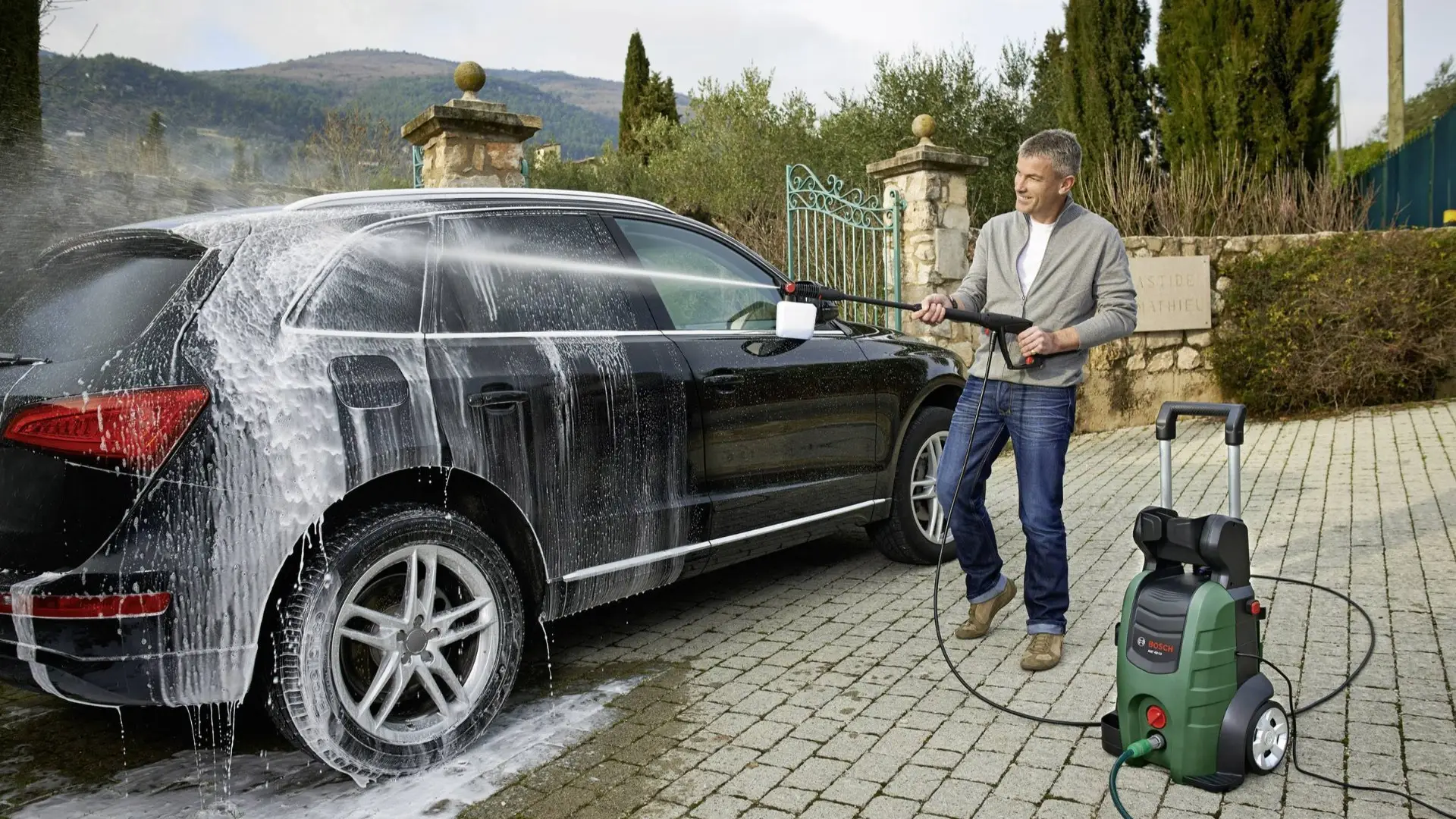
Detergent attachments make it easier to apply car shampoo or foam before rinsing. This turns the machine into more than a strong hose. It becomes a complete Car Washing Machine for pre rinsing, detergent application, focused cleaning, and final rinsing.
Still, pressure should never be considered alone. Water flow also matters because pressure loosens the dirt, while flow helps carry it away.
Why More Vehicle Owners Are Choosing Pressure Washers
Convenience plays a major role in the growing interest in home cleaning equipment. People want a faster way to maintain their vehicles without booking a professional wash every time dust, mud, or bird droppings appear.
A Pressure Washer for Cars can reach sections that are difficult to clean with a bucket. These include alloy wheels, wheel arches, grilles, door edges, panel gaps and lower body sections.
The controlled spray also allows you to work on one area at a time. You can rinse loose dirt, apply compatible detergent, clean the surface, and complete the final rinse without repeatedly carrying buckets around the vehicle.
Bosch offers Aquatak pressure washers for cleaning requirements that range from light household work to larger and more demanding tasks. The available range includes machines with maximum pressure ratings from 100 bar to 160 bar, depending on the model.
This variety gives buyers more choice, but it also creates an important question. Do you need the highest pressure available, or would a smaller machine already meet your needs?
Features That Make a Real Difference
Not every feature has equal value. A suitable Bosch Pressure Washer should match your vehicle size, cleaning frequency, available space and other household tasks.
Pressure and Water Flow
Maximum pressure indicates the strongest output a machine can produce. Higher figures can be useful for stubborn outdoor dirt, but they do not automatically make a washer better for car paint.
For example, the Bosch EasyAquatak 110 has a 1,300 W motor, a maximum pressure of 110 bar, and a maximum flow rate of 5.5 litres per minute. Its compact design is aimed at smaller cleaning tasks such as cars, patios and garden furniture.
The UniversalAquatak 125 increases the maximum pressure to 125 bar and provides a maximum flow rate of 6 litres per minute. It also has a 1,500 W motor and a 5 metre pressure hose.
For more demanding work, the AdvancedAquatak 140 offers a 2,100 W motor, 140 bar maximum pressure, 7.5 litres per minute maximum flow, and an 8 metre hose.
These figures help you compare machines, but your actual usage should guide the decision.
Nozzle Options
A nozzle changes the shape and concentration of the spray.
A variable fan jet is useful because it allows broader and gentler cleaning. A concentrated spray can address small patches of stubborn dirt, while a rotary jet is better reserved for tough surfaces such as driveways and patios.
The UniversalAquatak 125 includes a three in one nozzle with fan, rotary, and pencil spray settings. Bosch describes the fan setting as suitable for general rinsing, while the stronger pencil and rotary sprays are designed for more persistent dirt.
For regular car washing start with a wider spray. Stronger settings should be used carefully and only where appropriate.
Detergent Application
A detergent attachment can spread shampoo or foam more evenly than applying it manually.
The EasyAquatak 110 and EasyAquatak 120 include a 450 ml high pressure detergent nozzle in their listed package contents. The UniversalAquatak 125 also includes a 450 ml detergent nozzle, while the AdvancedAquatak 140 includes a larger 550 ml version.
This can save time during pre washing, especially when cleaning an SUV or more than one vehicle.
Hose Length and Mobility
A longer hose allows you to walk around the vehicle without moving the machine repeatedly.
Compact models are easier to store and carry, while larger machines may offer wheels, telescopic handles, and hose reels. The AdvancedAquatak 140, for instance, includes large wheels, a telescopic handle, and an integrated hose reel.
Think about your parking area. Will a 3 metre hose reach both sides comfortably, or would 5, 6, or 8 metres make the job easier?
Alternative Water Sources
Selected Bosch washers support self priming. Bosch also offers a self priming kit with a 3 metre supply hose, universal coupling and strainer. It allows compatible Aquatak washers to draw water from secondary sources such as rainwater tanks.
The strainer helps prevent particles from entering the machine, which matters when the water is not coming directly from a tap.
Benefits You Notice During Every Wash
The most immediate benefit of a Bosch High Pressure Washer is reduced manual effort. Pressurised water loosens dust, mud, and road film before you touch the paint with a wash mitt.
This does not mean you should remove every mark using pressure alone. Some dirt still requires a proper contact wash. However, a thorough pre rinse can reduce the amount of grit remaining on the surface.
You also gain better control over the process. You choose the cleaning solution, the nozzle, the working distance, and the amount of attention each section receives.
Regular home washing can also help you maintain the vehicle between professional detailing appointments. You can clean fresh dirt before it hardens, rinse mud from the wheel arches, and remove bird droppings before they remain on the paint for too long.
The same Car Cleaning Machine can serve hatchbacks, sedans, SUVs, motorcycles, scooters, and bicycles, provided you use a suitable spray pattern and safe technique.
One Washer for More Than Your Car
A major advantage of Bosch Cleaning Equipment is its usefulness beyond vehicle care.
Depending on the model and accessories, you can use a pressure washer to clean garden furniture, outdoor walls, bins, bicycles, tools, patios, paved areas, garage floors, and driveways.
Bosch positions the AdvancedAquatak 140 for demanding dirt on surfaces that include large cars, patios, and driveways.
The important point is to change your method according to the surface. A spray that works well on concrete may be too concentrated for paint, rubber seals, wooden furniture, or delicate outdoor coatings.
One machine can handle several jobs, but the correct nozzle and distance make all the difference.
How to Choose the Right Bosch Car Washer
The right washer is not always the largest or most powerful one. It is the machine that fits the work you actually plan to do.
Begin with Your Main Use
Ask yourself a few practical questions.
Will you wash one small car occasionally or several vehicles every week? Do you own a large SUV? Will the washer also clean patios and driveways? Do you have enough storage space for a larger wheeled model?
For occasional vehicle cleaning, a compact washer may offer all the performance you need. For frequent cleaning across several surfaces, a mid range model may provide a better balance of power, hose length and accessories.
Compare Complete Specifications
When comparing a Bosch Car Washer review
- Maximum pressure
- Maximum water flow
- Motor power
- Hose length
- Machine weight
- Nozzle options
- Detergent capacity
- Storage design
- Included accessories
The UniversalAquatak 130, for example, provides 130 bar maximum pressure, 7 litres per minute maximum flow, a 1,700 W motor, a 6 metre hose and a three in one nozzle.
A buyer who needs a wider working range may find those features more useful than simply choosing a machine with the highest possible pressure.
Check What Comes in the Box
Package contents vary by model. Common items include the spray gun, lance, high pressure hose, detergent nozzle, water filter, rotary nozzle, and variable fan nozzle.
Do not assume that a brush, patio cleaner, extension hose or self priming kit is included. Bosch sells several of these items separately as compatible accessories.
Check the exact model number and listed contents before making a purchase.
Consider Support and Genuine Products
Buying from an authorised source helps you receive the correct model, compatible accessories, proper documentation and support when required.
This becomes especially important with Bosch Power Tools and cleaning equipment because hoses, connectors, nozzles, and replacement parts must match the specific product range.
How Bosch Compares with Other Cleaning Options
How Bosch Compares with Other Cleaning Options
| Comparison point | Bosch car washer | Ordinary hose | Unbranded pressure washer |
| Cleaning force | Focused and model specific | Low pressure rinsing | Varies by product |
| Nozzle selection | Listed for each model | Basic spray adjustment | May vary |
| Detergent application | Available with many models | Usually manual | Package dependent |
| Storage | Compact and wheeled options | Simple hose storage | Varies |
| Published specifications | Clearly listed | Limited relevance | May be incomplete |
| Accessory range | Compatible Bosch accessories | Basic attachments | Brand dependent |
| Best use | Cars and household cleaning | Light rinsing | Depends on build and support |
A Bosch machine should not be selected only because of the brand name. Compare specifications, handling, accessories, servicing and expected use.
A lower priced washer may appear attractive, but limited accessory availability or unclear performance details can affect long term value. On the other hand, buying a large professional machine for occasional home use may be unnecessary.
The right choice sits between price, performance, and practical convenience.
Car Washing Mistakes You Should Avoid
Even good Vehicle Cleaning Equipment can cause problems when used incorrectly.
- Holding the nozzle too close
High pressure can affect damaged paint, loose trim, seals, stickers, and decals. - Using the narrowest spray of paint
Start with a wider fan pattern and maintain a safe distance. - Using a rotary nozzle on body panels
Rotary sprays are generally better suited to stubborn dirt on hard outdoor surfaces. - Spraying directly into sensitive areas
Avoid prolonged spraying around exposed wiring, sensors, charging points, locks, and damaged seals. - Using household cleaning chemicals
Strong detergents may remove wax or affect painted and plastic surfaces. Use a compatible automotive shampoo. - Washing hot panels
Allow the vehicle to cool before applying water or detergent. - Skipping the pre rinse
Removing loose dust first reduces the chance of rubbing grit into the paint. - Allowing the detergent to dry
Clean one section at a time and rinse the product before it dries on the surface.
Good technique protects the vehicle and improves the final result.
Simple Maintenance for Reliable Performance
A little care can help your Bosch Pressure Washer perform consistently.
Check the water filter regularly and remove collected dirt. Bosch explains that its inlet filter blocks small particles from reaching the pump and can be removed for cleaning.
After use, switch off the machine, disconnect the water supply, and press the trigger to release remaining pressure. Drain water from the hose before storage, then inspect the connectors, seals and nozzle openings.
Keep the machine and its accessories in a dry, covered area. Avoid leaving the washer exposed to rain, direct sunlight, or extreme temperatures.
You should also avoid running the pump without an adequate water supply. Follow the operating and storage instructions provided for your exact model.
Is a Bosch Car Washer Worth Buying
A Bosch Car Washer can make routine vehicle cleaning faster, more organised, and less physically demanding. It gives you greater control over the water spray, detergent, accessories, and overall washing method.
The best model depends on your vehicle size, cleaning frequency, available space, and the additional surfaces you want to clean. Focus on pressure, flow rate, hose length, nozzle options and package contents rather than choosing through pressure numbers alone.
Need help selecting the right Pressure Washer for Cars? Speak with Shirazee Traders to compare suitable Bosch models, accessories, and cleaning requirements before you buy.
Frequently Asked Questions
How much water does a Bosch car washer use?
Water use depends on the model and operating time. The EasyAquatak 110 has a listed maximum flow rate of 5.5 litres per minute, while the UniversalAquatak 125 provides up to 6 litres per minute.
Can a Bosch pressure washer damage car paint?
Yes, incorrect use can damage weak paint, loose decals, or sensitive trim. Use a wide spray, keep a reasonable distance and avoid directing concentrated pressure at damaged areas.
How often should you wash your car with a pressure washer?
There is no fixed schedule for every vehicle. Wash it when road grime, mud, bird droppings, or visible dust begins to build up. Driving conditions, weather, parking location, and vehicle use will affect the frequency.
What accessories come with a Bosch car washer?
Accessories vary by model. Common package items include a spray gun, lance, high pressure hose, detergent nozzle, water filter, rotary nozzle and variable fan nozzle. Always check the exact product listing before purchasing.