
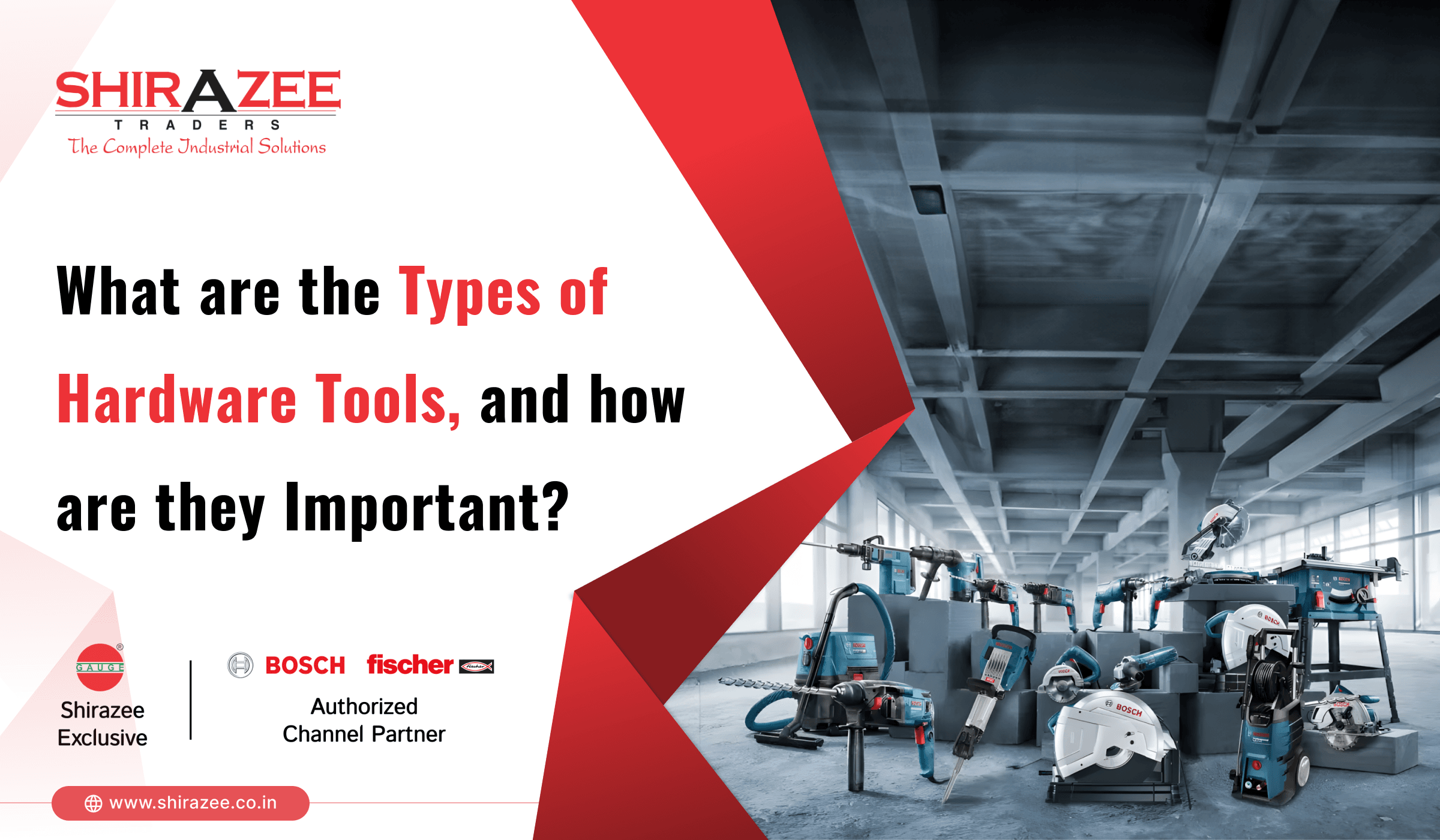
Think about the last time you fixed something at home. Maybe it was a loose cabinet hinge, a broken chair leg, or a shelf that needed to be mounted on the wall. The first thing you probably reached for was a tool. Hardware tools make everyday repairs, construction work, and industrial tasks possible.
From simple household fixes to large construction projects, the right tools help people work faster and more accurately. Without proper tools, even small jobs can become frustrating and time-consuming.
Hardware tools are designed for different purposes. Some tools help cut materials, some help fasten parts together, and others provide the control needed for detailed work. Understanding the main categories of tools makes it easier to choose the right one for the task.
In this blog, we will explore the main types of hardware tools including Hand Tools, Power Tools, Cutting Tools, and Fastening Tools, and why they are so important in everyday work.
1. Hand Tools
Hand tools are usually the first tools people learn to use. They are manually operated and do not require electricity or batteries. Because of their simplicity and reliability, they are still widely used in workshops, construction sites, and homes.
Common hand tools include screwdrivers, hammers, pliers, and wrenches. These tools are perfect for tasks that require careful control and precision.
Screwdrivers
A screwdriver might look simple, but it is one of the most useful tools in any toolbox. It is used for tightening or removing screws and comes in different types such as Phillips, flat-head, and Torx. Whether you are assembling furniture or fixing a small appliance, a screwdriver is often the first tool you need.
Hammers
A hammer is one of the oldest tools still used today. It is commonly used for driving nails, shaping materials, or breaking objects during repair work. On construction sites, hammer drills are also used when drilling into hard materials like brick or concrete.
Pliers
Pliers are extremely versatile tools. They can grip, bend, twist, and sometimes even cut materials. Electricians, plumbers, and mechanics rely on them every day. Common types include needle-nose pliers, slip-joint pliers, and cutting pliers.
Wrenches
Wrenches are used to tighten or loosen nuts and bolts. They apply torque to fasteners and are commonly used in automotive repair, plumbing, and machinery maintenance. Adjustable wrenches, socket wrenches, and pipe wrenches are among the most widely used.
Importance of Hand Tools
Hand tools remain important because they offer excellent control and accuracy. Many tasks require careful handling where power tools may not be necessary. Their durability and simplicity make them essential for both professionals and DIY enthusiasts.
2. Power Tools
While hand tools are great for precise work, some jobs simply require more power. That is where power tools become useful.
Power tools run on electricity, batteries, or compressed air. They help workers complete tasks faster and reduce physical effort. Because of this, they are widely used in construction, carpentry, and manufacturing.
Some of the most common power tools include drills, grinders, sanders, and saws.
Hammer Drills
Hammer drills combine regular drilling with a hammering action. This allows them to drill through tough materials such as concrete, brick, and stone. If you have ever tried drilling into concrete with a regular drill, you know how difficult it can be. A hammer drill makes the job much easier.
Cordless Screwdrivers
Cordless screwdrivers are battery-powered tools designed to drive screws quickly. They are especially helpful when working on repetitive tasks like assembling cabinets or installing fixtures.
Importance of Power Tools
Power tools significantly improve productivity. Tasks that might take hours with manual tools can often be completed in minutes. They also reduce physical strain, which is especially important for professionals working long hours on construction or manufacturing projects.
3. Cutting Tools
Cutting tools are used to shape or cut materials such as wood, metal, plastic, or other construction materials. Clean and accurate cuts are important for maintaining the quality of any project.
Common cutting tools include saws, snips, and shears.
Saws
Saws are among the most commonly used cutting tools. Depending on the type of work, different saws can be used. Hand saws are often used for simple wood cutting, while circular saws and table saws are used for larger and more precise cutting jobs.
Snips
Snips are similar to scissors but are designed for cutting tougher materials like sheet metal. They are commonly used in industries such as roofing, plumbing, and HVAC work.
Importance of Cutting Tools
Cutting tools help create accurate shapes and clean edges. This improves the overall quality of the final product. Precise cutting also reduces material waste and ensures that components fit together properly.
4. Fastening Tools
Fastening tools are used to join different materials together securely. Without proper fastening tools, structures and equipment would not hold together safely.
Common fastening tools include screwdrivers, wrenches, and drills.
Screwdrivers
Screwdrivers are simple but extremely useful tools for driving screws into materials. They are used in everything from furniture assembly to electrical installation.
Drills and Impact Drivers
Drills are used to create holes in materials, while impact drivers are designed to drive screws and bolts with greater torque. Impact drivers are particularly useful when fastening screws into harder materials.
Importance of Fastening Tools
Fastening tools ensure that parts stay firmly connected. Whether it is assembling furniture or constructing large structures, strong fastening improves stability, safety, and durability.
Conclusion
Hardware tools are essential for many types of work, from simple home repairs to complex industrial projects. Each category of tools serves a different purpose.
Hand tools provide control and precision.
Power tools help complete tasks faster and with less effort.
Cutting tools ensure accurate shaping of materials.
Fastening tools create strong and reliable connections.
Using the right tools makes work easier, improves efficiency, and helps achieve better results. For professionals and DIY enthusiasts alike, investing in high-quality hardware tools is always a smart decision.