
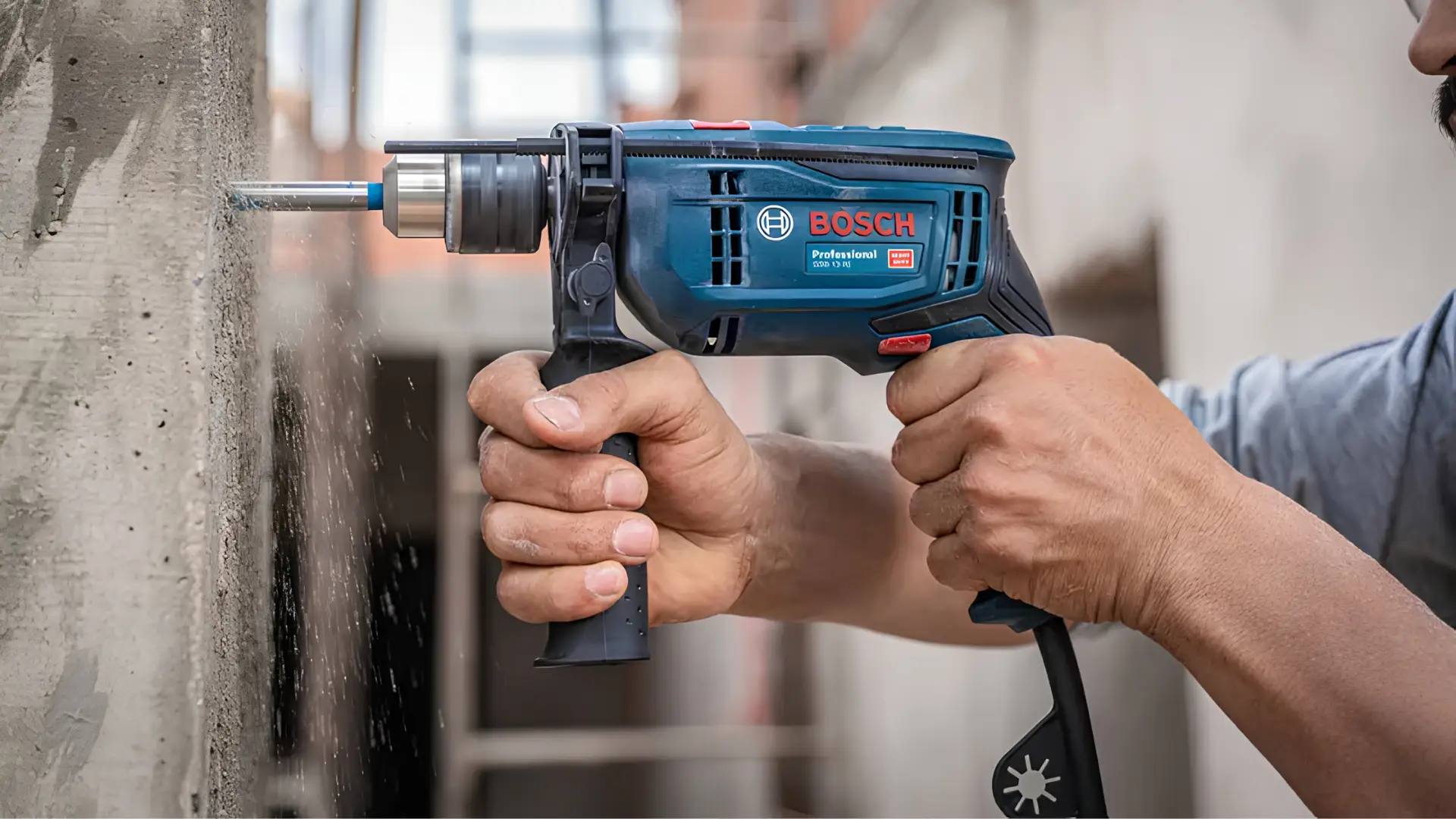
Choosing a drill machine sounds simple until you stand in front of two highly popular models that look almost identical but perform very different jobs.
This is exactly where many professionals, contractors, technicians, and workshop owners find themselves when comparing Bosch GSB 13 RE vs. GBM 13 RE. Both are reliable Bosch tools. Both come with powerful 600W motors. Both have built a strong reputation in the market. Yet their purpose is not the same.
The real challenge is understanding which one suits perfectly with the type of work you do every day Pick the right drill, and your work becomes faster and smoother. Pick the wrong one, and even a premium tool can feel inadequate and cause a delay.
If you are trying to decide between an impact drill and a rotary drill, this guide will help you make a confident choice.
The Common Buying Dilemma Most Users Face
Imagine you are purchasing a new bosch drill machine for your workshop or construction site.
You compare specifications and notice that both the GSB 13 RE and GBM 13 RE feature a 600W motor. Both come from a globally trusted manufacturer. Both are widely recommended by professionals.
Naturally, the question arises.
If both are Bosch drills, why are there two separate models?
The answer lies in the type of work they are designed to handle.
Many buyers assume that one drill can efficiently perform every drilling task. While that sounds convenient, real world projects often involve different materials such as concrete, brick, wood, and metal. Each material demands a different drilling approach.
This is why understanding Impact Drill vs. Rotary Drill becomes important before making a purchase.
A contractor installing anchor fasteners into a concrete wall has very different requirements compared to a fabricator drilling holes in steel sheets. The right drill can improve productivity, reduce effort, and help achieve better results.
Why Choosing the Right Drill Matters More Than Ever
Construction sites, manufacturing units, maintenance departments, and fabrication workshops have changed significantly over the years.
Projects are expected to move faster. Precision requirements are higher. Downtime is more expensive than ever.
As a result, professionals increasingly rely on specialised tools rather than trying to make one tool handle every task.
According to Bosch Professional specifications, the GSB 13 RE delivers up to 44,800 impacts per minute, allowing it to handle masonry applications more effectively than a standard rotary drill.
At the same time, rotary drills continue to remain the preferred choice for precision drilling in wood and metal This shift reflects a broader trend across industries. The focus is no longer simply owning power tools, but has shifted to selecting the right tool for the right application, for better productivity and less time.
That is also why many professionals prefer purchasing from an authorized bosch power tools dealer. Access to genuine products, warranty support, and expert guidance often makes a significant difference over the life of the tool.
Understanding the Core Difference Between Impact and Rotary Drills
Before comparing specific models, it helps to understand the basic difference between the two drilling technologies.
What Makes an Impact Drill Different
An impact drill combines rotational movement with a rapid hammering action.
As the bit rotates, it also moves forward and backwards at high speed. This repeated impact helps break through hard materials such as brick, concrete, and masonry.
Think about drilling into a concrete wall. Without impact action, the drill bit must rely solely on rotation, progress becomes slower and requires more effort.
With impact action, the tool effectively chips away at the material while drilling, making the process quicker and easier.
This is where a bosch impact drill machine becomes highly valuable.
How a Rotary Drill Works
A rotary drill operates differently.
Instead of delivering impacts, it focuses entirely on smooth rotational movement.
This makes it ideal for applications where precision is more important than impact force.
When drilling metal, wood, or similar materials, clean holes and controlled drilling matter more than hammering action.
This is why many workshop professionals prefer a bosch rotary drill machine for fabrication and woodworking tasks.
Now that the fundamental difference is clear, let’s look at the two models individually.
Bosch GSB 13 RE Explained
Built for Versatility on the Job Site
The GSB 13 RE is designed for users who regularly encounter masonry, brick, and concrete surfaces.
With its impact drilling capability, it can transition between different materials without requiring multiple tools.
Some of its key advantages include
- 600W motor
- Impact drilling function
- Variable speed control
- Forward and reverse operation
- Compact and lightweight design
According to Bosch Professional specifications, the drill supports capacities of
- 13 mm in concrete
- 10 mm in steel
- 25 mm in wood
These capabilities make it suitable for a wide range of construction and maintenance applications.
Where It Performs Best
The GSB 13 RE is particularly useful for
- Electrical installations
- Wall mounting applications
- Anchor fixing work
- Construction maintenance
- Interior renovation projects
If your work frequently involves masonry surfaces, this model offers the flexibility needed to tackle various tasks efficiently.
Bosch GBM 13 RE Explained
Precision Comes First
The GBM 13 RE takes a different approach.
Rather than focusing on impact action, it prioritises smooth and controlled drilling performance.
This makes it especially valuable in workshops, fabrication facilities, and manufacturing environments.
Its key features include
- 600W motor
- Rotary drilling operation
- Variable speed control
- Reversible rotation
- High drilling accuracy
According to Bosch specifications, the drill supports
- 13 mm drilling capacity in steel
- 30 mm drilling capacity in wood
These numbers highlight its strength in precision-based applications.
Where It Performs Best
The GBM 13 RE is commonly used for
- Metal fabrication
- Carpentry projects
- Furniture manufacturing
- Industrial maintenance
- Workshop operations
If accuracy and clean hole quality matter most, the GBM 13 RE becomes a strong contender.
Bosch GSB 13 RE vs. GBM 13 RE Side by Side Comparison
Now comes the comparison most buyers are looking for.
Masonry and Concrete Work
The clear winner here is the GSB 13 RE.
Its impact mechanism allows it to penetrate concrete and brick more effectively. The hammering action significantly reduces drilling effort.
Metal Drilling
For metal applications, the GBM 13 RE has an advantage.
The smooth rotational operation delivers greater precision and control.
Woodworking Applications
Again, the GBM 13 RE performs exceptionally well.
Its design helps create cleaner holes and provides better accuracy when working with wooden materials.
Multi Material Projects
The GSB 13 RE offers more versatility.
If your projects regularly involve concrete, wood, and metal, having impact capability gives you greater flexibility.
Workshop Environments
The GBM 13 RE is often the preferred choice.
Its focus on controlled drilling makes it well suited for production environments where precision is critical.
When evaluating Bosch GSB 13 RE vs. GBM 13 RE, the better tool depends entirely on your primary application.
Which Drill Should You Choose Based on Your Work
The easiest way to decide is by looking at the material you work with most often.
Choose the GSB 13 RE if you regularly drill into:
- Concrete
- Brick
- Masonry
- Mixed construction materials
This makes it an excellent choice for
- Electricians
- Contractors
- Site engineers
- Installation professionals
Choose the GBM 13 RE if you primarily work with
- Steel
- Metal sheets
- Wood
- Fabrication projects
It is particularly suitable for
- Fabricators
- Carpenters
- Manufacturing units
- Workshop professionals
Still unsure?
Ask yourself one simple question.
Will I spend more time drilling concrete walls or metal surfaces?
The answer often points directly to the right tool.
For genuine products and expert advice, many professionals prefer purchasing through authorized bosch dealers in India. If you are located in Maharashtra, a trusted Bosch dealer in Pune can also help evaluate your project requirements and recommend the most suitable model.
Mistakes Buyers Often Make
Even experienced buyers occasionally make avoidable mistakes.
Here are some of the most common ones.
Choosing Based Only on Price
A lower purchase price may not deliver better long term value if the tool is not suited to your work.
Ignoring Material Type
The material being drilled should always influence your decision.
Assuming One Drill Can Do Everything
Different tools are optimised for different tasks.
Buying from Unverified Sources
Authenticity, warranty support, and service availability matter. This is why purchasing through a reliable bosch power tools dealer is important.
Focusing Only on Motor Power
While both drills feature 600W motors, their operating mechanisms create very different performance outcomes.
Avoiding these mistakes can save both time and money.
Final Thoughts Before You Buy
The discussion around Bosch GSB 13 RE vs. GBM 13 RE is not about identifying a universal winner.
Both models are excellent tools. They simply serve different purposes.
If your work frequently involves concrete, brick, and masonry surfaces, the bosch impact drill machine offers the versatility and drilling power needed for demanding site conditions.
If your focus is precision drilling in metal, wood, and workshop applications, the bosch rotary drill machine provides the control and accuracy required for consistent results.
Before making a final decision, take a moment to evaluate the materials you work with most often. That simple step can help ensure you invest in a tool that supports productivity for years to come.
For additional guidance, product recommendations, or genuine Bosch power tools, connect with an authorised dealer and choose a drill that matches your application, not just the specification sheet.
FAQs
Can the Bosch GSB 13 RE drill into concrete?
Yes. Its impact drilling mechanism is specifically designed for masonry and concrete drilling.
Is the GBM 13 RE suitable for metal fabrication?
Yes. It is widely used for precise drilling in steel and other metal materials.
What is the difference between an Impact Drill and a Rotary Drill?
An impact drill combines rotation with hammering action, while a rotary drill uses rotational movement only.
Where can I buy genuine Bosch drill machines?
You should purchase from authorized bosch dealers in India or a trusted bosch power tools dealer to ensure authenticity and warranty support.
Why do professionals choose application specific drills?
Using the right drill for the intended material improves efficiency, accuracy, tool life, and overall productivity.